Far Infrared Heating Pads – What Are They and How Do They Work?
Last Updated::
Far-infrared (FIR) heating pads are therapeutic devices that use specific wavelengths of infrared radiation to deliver heat to the body. Unlike conventional heating pads that primarily warm the skin surface, far-infrared technology is designed to penetrate deeper into tissues.
They offer a drug-free option that many users report helps with various concerns. Research suggests they may support circulation, help relax tight muscles, and potentially support the body’s natural recovery processes. These devices are commonly used for temporary pain relief and comfort when used appropriately as a complementary tool alongside other treatments.
To understand how these devices work, what research shows about their effectiveness, and important safety considerations, continue reading.
Far-infrared heating pads are not intended to diagnose, treat, cure, or prevent any disease. Individual results may vary. This information is for educational purposes only and does not constitute medical advice
Far Infrared vs. Regular Heating Pads: Understanding the Differences
When considering options for temporary pain relief and comfort, two main types of heating devices are commonly available: regular (conventional) heating pads and far-infrared heating pads. Both generate warmth, but they differ in their mechanism and depth of heat penetration.
Regular Heating Pads
Conventional heating pads use electricity to generate surface-level heat that warms nearby tissues. Research indicates that surface heat can temporarily increase local blood flow, which may provide short-term comfort and ease muscle tension. The warmth from regular pads can offer a comforting sensation that some users find helpful for discomfort.
However, regular heating pads have noted limitations:
• Heat primarily affects skin and superficial tissues
• Risk of burns if used improperly or for extended periods
• Effects are temporary, typically lasting hours after use
• Continuous or repeated sessions are needed for ongoing relief
Far-Infrared Heating Pads
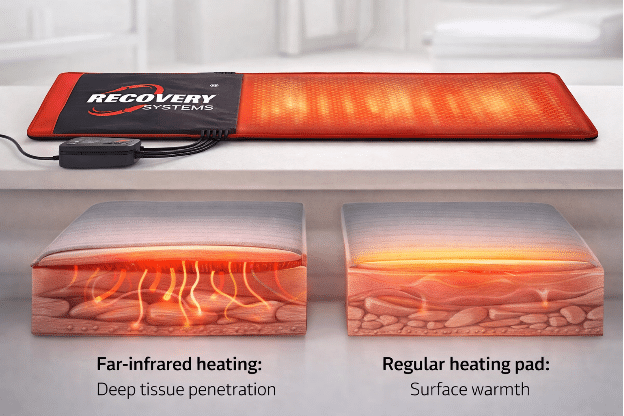
Far-infrared (FIR) heating pads use far-infrared radiation—wavelengths naturally present in sunlight but without ultraviolet (UV) rays—to deliver warmth. Unlike surface heat, research suggests that far-infrared energy may penetrate deeper into the body, potentially reaching muscles and joint tissues.
According to research, far-infrared therapy may offer several potential benefits when used appropriately:
- Pain relief: Studies suggest FIR may help reduce pain in certain chronic conditions
- Circulation: Research indicates FIR may influence local blood flow patterns
- Muscle tension: Some studies report that FIR heat may help relax muscle tension
- Temporary symptomatic relief: Effects are comparable to regular heating pads—temporary and short-term (hours to days)
Which Heating Pad Works Better Regular or Far Infrared
Both regular and far-infrared heating pads can be useful complementary tools for temporary comfort. Your choice may depend on:
- Personal preference and tolerance to different heat types
- Cost considerations (FIR pads tend to be more expensive)
- Depth of application needed for your condition
- Medical guidance from your healthcare provider
What is Far Infrared Heat?
Far-infrared (FIR) radiation refers to a specific segment of the electromagnetic spectrum’s infrared range, encompassing wavelengths from approximately 3 micrometers (μm) to 1,000 μm. Research suggests that far-infrared wavelengths may penetrate the human body to a depth of approximately 1.5 inches (3.8 centimeters), though individual penetration can vary based on skin composition, melanin content, and other factors.
The heating elements in far-infrared heating pads are typically composed of carbon fibers or similar materials. When electrically activated, these materials emit infrared radiation. Far-infrared heating pads are designed to deliver heat that penetrates deeper into the body, while conventional heating pads primarily provide surface-level warmth.
Mechanism of Action Far Infrared
While the exact mechanisms are not fully understood, research investigating far-infrared heating pads suggests several potential physiological effects:
- Heat Penetration and Tissue Warming
Far-infrared radiation is absorbed by tissues, creating localized warmth that may extend beyond the skin surface. This thermal effect differs from conventional surface-heating pads, which primarily warm the epidermis.
- Nitric Oxide and Vasodilation
Some research suggests that heat exposure may influence nitric oxide synthesis in endothelial cells. Nitric oxide plays a role in regulating vascular tone, potentially facilitating vasodilation (widening of blood vessels). However, the clinical significance of this effect in the context of far-infrared heating pads is not fully established.
- Circulation and Nutrient Delivery
Research indicates that local heat may temporarily increase blood flow to the application area, which could theoretically enhance oxygen and nutrient delivery to tissues. However, these effects are typically short-term and have not been proven to produce lasting physiological changes.
- Pain Modulation
Types of Far-Infrared Heating Pads
Far-infrared heating pads are available in various formats to suit different application needs:
1. Full-Body Mats
Full-body far-infrared heating mats are large pads designed to accommodate the user lying down, providing coverage across large areas of the body. These pads allow for broader exposure to far-infrared heat therapy across multiple body regions. One example of a full-body far-infrared heating pad is the Recovery Systems large PEMF BioMat. It offers far-infrared therapy with 4 other recovery modalities like PEMF, negative ions, and red light therapy.
2. Targeted Pads and Wraps
Targeted heating pads and wraps are smaller, more flexible devices designed for application to specific body areas such as the back, shoulders, knees, or neck. These formats offer portability and allow for focused heat application to localized areas of concern. Like full-body mats, some targeted pad models incorporate multiple modalities, including far-infrared, PEMF, negative ions, and light therapy options. Recovery Systems also offers BioMat wraps that combine far-infrared therapy with PEMF, negative ions, and red light therapy for concentrated heat therapy on a specific area.
Health Benefits of Far Infrared Heating Pads
Research investigating far-infrared heating pads has examined their effects on various pain conditions. Systematic reviews and clinical studies suggest that far-infrared therapy may provide benefits for certain acute and chronic conditions when used as a complementary approach alongside other treatments.
The following represents conditions where research has investigated far-infrared therapy.
Back Pain
Heat therapy has been extensively studied for mild-to-moderate low back pain. A comprehensive narrative review (Freiwald et al., 2021) examined the role of superficial heat therapy for non-specific low back pain, analyzing multiple clinical trials. The review found that continuous, low-level heat therapy may provide pain relief and improve muscle flexibility, particularly when combined with exercise.
In clinical trials, patients using continuous heat wrap therapy experienced greater pain relief than those using acetaminophen or ibuprofen and showed significant improvements in muscle stiffness and flexibility. However, heat should not be applied for the first 48 hours after an acute injury, when cold therapy is recommended.
Knee Osteoarthritis
Far-infrared heat therapy has been more extensively studied for knee osteoarthritis. The American College of Rheumatology conditionally recommends locally applied heat for knee osteoarthritis to provide temporary pain relief and improve stiffness. A 2022 systematic review (Tsagkaris et al., 2022) found that infrared therapy appears effective for reducing pain and improving function in knee osteoarthritis when used alongside exercise.
Fibromyalgia
Research suggests that far-infrared therapy may help alleviate pain in patients with fibromyalgia. A pilot study (Salm et al., 2019) found that adding far-infrared therapy to aquatic exercise for four weeks produced significantly greater reductions in pain, improved quality of life, and reduced inflammatory markers compared to aquatic exercise alone, suggesting FIR therapy provides additional therapeutic benefits.
Important Note: Effects from heat therapy are typically temporary (hours to days) and work best when combined with active treatments like exercise and physical therapy. Heat therapy should complement, not replace, professional medical care. Individual results vary, and more research is needed to establish long-term efficacy.
Who Should Avoid or Use Caution With Far-Infrared Heating Pads
- Pregnant women due to limited research on the safety of far infrared heat during pregnancy
- People with active bleeding or bleeding disorders such as hemophilia because heat can increase blood flow and worsen bleeding
- Individuals with acute inflammation or recent injury within the first 48 hours since heat may increase swelling and pain
- People with malignant tumors because heat should not be applied on or near cancerous areas
- Cardiac pacemakers or implanted electronic devices because electromagnetic properties of some far infrared devices may interfere with device function
- Metal implants in the treatment area since heat conduction around metal implants requires medical evaluation
- Multiple sclerosis, lupus, or other autoimmune conditions as heat sensitivity varies and professional guidance is needed
- Severe adrenal suppression or Cushing’s syndrome because heat stress may affect hormonal responses
- Diabetes or peripheral neuropathy due to reduced sensation which increases the risk of unnoticed burns
- Cognitive impairments since difficulty recognizing or communicating discomfort requires supervised use
- Cardiovascular conditions because heat increases heart rate and circulation and a cardiologist’s advice is recommended
- Severe varicose veins or risk of thrombosis as heat may worsen vascular conditions
- Fever or acute illness because heat should not be used during fever or active systemic infection
- Recent surgery and heat therapy should only be used according to the surgeon’s recovery recommendations
Conclusion
Far-infrared heating pads may provide temporary relief from aches, stiffness, and discomfort when used appropriately as part of a broader pain management approach. Research suggests they may be helpful for various conditions. However, it is important to recognize their limitations. These pads are not a cure for medical conditions, and their effects are temporary and short-term, typically lasting only hours to days. Professional medical care should not be replaced with heat therapy alone, and results vary significantly between individuals.
For optimal benefits, heat therapy should be combined with other treatments such as exercise, physical therapy, or medical treatment. Before using far-infrared heating pads, especially if you have existing health conditions, are taking medications, or are managing chronic pain conditions, consult with your healthcare provider to ensure they are appropriate for your situation.
Medically reviewed by: Ayman Shafique, PharmD
Role: Pharmacist and medical writer
Reviewer bio:
Medically reviewed by Ayman Shafique, PharmD, a licensed pharmacist registered in Pakistan with expertise in pharmacology and medical writing. Her work focuses on reviewing and developing evidence based health and wellness content, ensuring scientific accuracy, clarity, and alignment with current pharmaceutical research. She specializes in translating complex pharmacological and medical information into accessible, reliable content for public and professional audiences.
Medical disclaimer: This article is for education only and does not replace evaluation or care from a licensed clinician. Do not start, stop, or change treatment without your healthcare provider’s guidance. If you are experiencing suicidal thoughts, contact your local emergency number immediately. In the United States call or text 988, and internationally see the International Association for Suicide Prevention directory.
Originally Published::

Author:
Michael Lyons is a biohacking and recovery specialist with three decades of tech and Meditech experience and 15,000+ hours in endurance sports coaching.