
Your CNS Isn’t “Fried.” Here’s What’s Actually Happening When You Feel Wrecked.
Last Updated::
Walk into any gym, scroll any lifting forum, or listen to any strength coach for more than ten minutes, and you’ll hear it: “my CNS is fried,” “that session was too much CNS demand,” “you need three days to recover your central nervous system after a heavy max effort day.”
It’s one of the most confidently repeated ideas in fitness culture. It’s also, in the specific way most people mean it, not something the research actually supports.
That doesn’t mean nothing is happening when you feel flat, unmotivated, and weaker than usual after a brutal training block. Something real is going on. It’s just not quite the thing everyone thinks it is, and understanding the difference changes what you should actually do about it.
What CNS Fatigue Actually Means in the Research
Central nervous system fatigue is a real, well-documented phenomenon in exercise physiology. It refers to a drop in the brain and spinal cord’s ability to drive voluntary muscle activation, distinct from fatigue happening in the muscle tissue itself. Researchers first built the modern framework for this in the 1990s, and it has been studied seriously ever since. Davis and Bailey (1997), Medicine & Science in Sports & Exercise
Here’s what’s genuinely established: during prolonged exercise, levels of key brain chemicals, including serotonin, dopamine, and noradrenaline, shift in ways that appear to increase perceived effort, dampen motor drive from the brain, and make you want to stop. Studies using drugs that manipulate these neurotransmitters have shown real, measurable effects on time to exhaustion and power output, particularly in the heat. Increasing brain dopamine activity, for instance, reliably lets people push harder before they hit a wall. Roelands & Meeusen (2010), Sports Medicine
There’s also a compelling theory from South African exercise physiologist Tim Noakes, sometimes called the central governor model, which argues that fatigue itself is a protective brain signal rather than a simple mechanical breakdown of the body. In this model, your brain deliberately limits effort to prevent you from damaging yourself, long before your muscles or organs are actually in danger. It’s a genuinely influential idea in exercise science, though it remains debated rather than universally accepted. Noakes (2012), Frontiers in Physiology
So central fatigue, as a concept, is real and has decades of legitimate research behind it. What’s much shakier is the specific claim you hear in gyms: that a single heavy squat or deadlift session “fries” your CNS for two or three days in some distinct, measurable way that’s different from ordinary muscle fatigue.
The Part Gym Culture Gets Wrong
Here’s the twist, and it’s worth sitting with. A meaningful body of more recent research has pushed back on the popular version of the CNS fatigue story, arguing that what lifters typically describe as CNS fatigue after a hard strength session looks, on closer inspection, a lot more like ordinary peripheral fatigue. This kind of fatigue happens in the muscle itself, along with genuine psychological and motivational factors, rather than a distinct neurological injury.
The foundational reviews on this, from researchers Roger Enoka and Jacques Duchateau, describe fatigue as a task-dependent, multidimensional phenomenon involving both central and peripheral contributors that vary enormously depending on the exercise, the muscle group, and the person, rather than a single, generic “CNS depletion” that heavy lifting reliably produces. Enoka & Duchateau (2008), Journal of Physiology; Enoka et al. (2011), Journal of Electromyography and Kinesiology
In plain terms: the flat, heavy, unmotivated feeling after a brutal squat session is real. But the popular explanation, that your nervous system has been specifically and uniquely depleted in a way that’s different from ordinary training fatigue, is a simplification that has outrun what the evidence actually shows. You may want to verify the current state of this research yourself, since this is an active and evolving area of exercise science, and reasonable researchers still disagree on exactly how to divide credit between central and peripheral mechanisms.
Why This Distinction Actually Matters
This isn’t just an academic argument. It changes how you should think about recovery.
If you believe your CNS gets uniquely “fried” by specific exercises, like heavy squats or Olympic lifts, you end up making decisions based on exercise selection: avoiding certain lifts, assuming a deadlift session demands fundamentally different recovery than an equivalent-effort conditioning session.
If the real picture is closer to what Enoka, Duchateau, and others describe, then what actually matters is the total training load, your sleep, your nutrition, your stress outside the gym, and how well you’re managing all of it together, regardless of which specific exercise produced the fatigue. That’s a more useful, more actionable framework, because it points you toward the levers that are actually within your control.
The Real Warning Signs Worth Tracking
Whatever you call the underlying mechanism, underrecovery and overtraining are genuinely measurable, and worth taking seriously. The research points to several practical markers:
Performance decrements that don’t bounce back. A drop in jump height, sprint speed, or your usual working weights that persists for more than a few days, despite adequate sleep and food, is a meaningful signal.
Heart rate variability (HRV) trends. HRV, the variation in time between heartbeats, reflects the balance between your sympathetic (“go”) and parasympathetic (“rest and digest”) nervous systems, and is increasingly used by athletes and coaches to track recovery status over time. A sustained downward trend in your personal HRV baseline is a more useful signal than any single day’s reading.
Mood, motivation, and sleep quality. Persistent irritability, a loss of desire to train, and disrupted sleep are recognised components of overtraining syndrome in the sports medicine literature, not separate, unrelated complaints.
Elevated resting heart rate. A resting heart rate that’s noticeably higher than your personal normal, on multiple consecutive mornings, is a classic and simple early flag.
None of these single measures is perfect on its own. Used together, over time, and compared against your own baseline rather than a generic population average, they give you a genuinely useful picture.
What Actually Helps
Given all of that, here’s the honest list, in order of how strong the evidence actually is.
Sleep is the foundation. It’s the single intervention most consistently linked to recovery of performance, mood, and hormonal balance in the research, and it’s the one most people shortchange first when life gets busy.
Structured periodisation and deload weeks. Planned reductions in training volume or intensity, built into your program in advance rather than forced on you by a crash, are a well-established strategy for managing accumulated fatigue over a training cycle.
Carbohydrate availability during and after prolonged exercise. Research going back decades has found that maintaining blood glucose during long training sessions appears to blunt the central fatigue response, independent of muscle glycogen levels, likely because the brain itself senses incoming carbohydrate and adjusts perceived effort accordingly. Foskett, Williams, Boobis & Tsintzas (2008), Medicine & Science in Sports & Exercise
Monitoring your own trends, not chasing a single bad reading. Whether you’re using HRV, resting heart rate, a simple jump test, or a training journal, the value is in the trend over weeks, not any single day.
Addressing life stress, not just training stress. Because central fatigue appears to be genuinely bound up with mood, motivation, and perceived effort rather than muscle tissue alone, the stress you’re carrying from work, sleep debt, and life in general is not a separate issue from your training recovery. It’s part of the same system.
Where Recovery Technology Honestly Fits
We sell recovery equipment for a living, so we want to be direct about this rather than oversell it: no compression boot, PEMF mat, or heat therapy device reverses central fatigue by itself, and no device replaces sleep, smart programming, or managing your training load. Anyone telling you a piece of equipment “clears your CNS” is going further than the evidence supports, and we’d rather lose that sale than make that claim.
What recovery tools can genuinely support is the parasympathetic side of the equation described above, the “rest and digest” state that’s relevant to how central fatigue and motivation appear to work.
Compression therapy has real, established evidence for supporting venous return and reducing the sensation of heaviness and soreness in the legs after hard training, which matters because how recovered your legs feel is part of what shapes your motivation and readiness for the next session.
The Recovery Systems PEMF Biomat combines PEMF, far-infrared heat, red light, and gentle warmth, and its best-supported, most consistently reported effect, including from our own customers, is improved sleep quality and a genuine, subjective sense of relaxation and reduced stress. Given how tightly sleep and stress are tied to the fatigue picture described above, a tool that reliably helps you wind down and sleep better is doing legitimate work, even though it isn’t “treating” central fatigue directly. That’s a more modest claim than a lot of recovery marketing makes. It’s also the honest one.
A Realistic Recovery Framework
- Track trends, not single days. Use HRV, resting heart rate, or a simple performance test, and watch the direction over two to three weeks.
- Build deload weeks into your program in advance, rather than waiting for a crash to force one on you.
- Protect your sleep like it’s part of your training program, because the research suggests it functionally is.
- Fuel adequately during long or intense sessions, particularly with carbohydrate availability, since the brain itself appears to respond to it.
- Use recovery tools, including compression and the Biomat, to support sleep, circulation, and stress management, understood honestly as support for the plan above, not a substitute for it.
- Talk to a coach or sports physician if performance decrements and poor sleep persist for more than two to three weeks despite these steps, since that pattern can indicate genuine overtraining syndrome, which deserves professional attention.
Frequently Asked Questions
Is CNS fatigue a real thing? Central fatigue, a genuine reduction in the brain’s ability to drive voluntary muscle activation during and after exercise, is a real and well-studied phenomenon. The specific popular gym claim that certain exercises uniquely “fry” your nervous system in a way clearly distinct from ordinary training fatigue is a simplification that current research does not fully support.
How long does CNS fatigue last? There’s no single, agreed answer, because researchers increasingly question whether it’s a distinct, separately measurable state at all. What is well established is that recovery from a hard training block depends heavily on total load, sleep quality, and nutrition, and that persistent performance drops lasting more than a few days despite good sleep and food deserve attention.
What are the warning signs of overtraining? Persistent, unexplained drops in performance, a declining trend in heart rate variability, elevated resting heart rate, poor sleep, low motivation, and mood changes are the markers most consistently cited in the sports medicine literature.
Can compression boots or PEMF mats fix CNS fatigue? No single device reverses central fatigue on its own, and we would not want to claim otherwise. Compression therapy and PEMF Biomat use are reasonably supported for circulation, muscle comfort, relaxation, and sleep quality, all of which plausibly support recovery, but the primary levers remain sleep, training load management, and nutrition.
Does heart rate variability actually predict recovery? HRV is a genuinely useful, widely used tool for tracking recovery trends over time, reflecting the balance of your sympathetic and parasympathetic nervous system activity. It works best as a personal trend line over weeks rather than a single daily verdict, and it should be one input among several rather than the only signal you act on.
Sources
Central fatigue mechanisms and neurotransmitter research are drawn from Davis & Bailey (1997), “Possible mechanisms of central nervous system fatigue during exercise,” Medicine & Science in Sports & Exercise, and Roelands & Meeusen (2010), “Alterations in Central Fatigue by Pharmacological Manipulations of Neurotransmitters in Normal and High Ambient Temperature,” Sports Medicine. The central governor theory is drawn from Noakes (2012), “Fatigue is a Brain-Derived Emotion that Regulates the Exercise Behaviour to Ensure the Protection of Whole Body Homeostasis,” Frontiers in Physiology. The critique of popular CNS fatigue claims and the central-versus-peripheral distinction are drawn from Enoka & Duchateau (2008), “Muscle fatigue: what, why and how it influences muscle function,” Journal of Physiology, and Enoka, Baudry, Rudroff, Farina, Klass & Duchateau (2011), “Unravelling the neurophysiology of muscle fatigue,” Journal of Electromyography and Kinesiology. Carbohydrate and central fatigue findings are drawn from Foskett, Williams, Boobis & Tsintzas (2008), Medicine & Science in Sports & Exercise. As with our other articles, please verify these citations and current findings against the primary literature before publishing, since this remains an active area of ongoing research.
About the Author
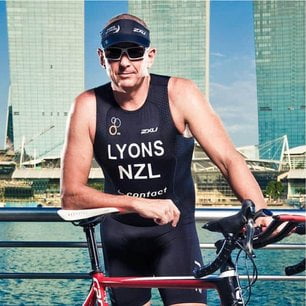
Michael Lyons
With three decades of tech and Meditech experience and 15,000 hours of endurance sports coaching and competing at the NZ national team level, Michael’s passion is biohacking recovery and wellness for athletes, for those with short- and long-term medical conditions, and healthy ageing.
Michael consults and partners with leading medical practitioners to provide therapy solutions for short- and long-term illnesses, including diabetes, DVT, lymphedema, pre- and postnatal, post-surgery, autism (ASD), PTSD, and sleep apnea. On the athlete side, Michael consults and partners with high-performance sports organisations, three Olympic gold medalists, two current world champions, the Rugby World Cup, NZ Rugby, the Singapore Olympic team, the NZ Olympic team, clubs and coaches.
Originally Published::
Author:
Michael Lyons is a biohacking and recovery specialist with three decades of tech and Meditech experience and 15,000+ hours in endurance sports coaching.