Perimenopause and Sleep: Why the Menopause Transition Disrupts Your Nights — And What Actually Helps
Last Updated::
Somewhere between your first missed period and your last one, sleep quietly stops being something you can take for granted.
You go to bed tired. You wake up at 3 a.m. for no obvious reason, heart going a little fast, sheets a little damp, and then you lie there doing the maths on how many hours you have left before the alarm. It happens again the next night. And the one after that.
If this sounds familiar, you’re not imagining it, and you’re not alone. Sleep disruption is one of the most common — and most under-discussed — symptoms of the menopause transition. And unlike hot flashes, which at least come with a recognisable name and a fair amount of public conversation, disrupted sleep tends to get quietly absorbed into daily life as just “not sleeping well anymore.”
Here’s what’s actually going on, and what the evidence says can help.
It’s not in your head — it’s in the data
Sleep researchers have been tracking this for decades, and the numbers are consistent across studies: sleep disturbance affects a meaningful share of women during the menopausal transition, with estimates in published reviews ranging from roughly 16% to 47% during perimenopause, rising again after menopause. Some studies using clinical insomnia criteria put the figure at around one in four perimenopausal women meeting the threshold for a formal insomnia diagnosis — not just “a bad night here and there,” but a persistent pattern lasting months.
The most common complaint isn’t trouble falling asleep. It’s trouble staying asleep — waking in the small hours and not being able to drift off again. That pattern lines up closely with the biology of what’s happening.
Why the menopause transition disrupts sleep
There are two things happening at once, and they compound each other.
The direct hormonal effect. Oestrogen and progesterone both play a role in regulating sleep architecture. As levels fluctuate — often unpredictably in the years before your final period — the mechanisms that normally help you fall and stay asleep become less reliable.
The indirect symptom effect. Hot flashes and night sweats are the best-documented drivers here. A flash that wakes you at 2 a.m. doesn’t just cost you those few minutes — it fragments your sleep architecture, pulling you out of the deeper stages that are hardest to reenter once disturbed. Sleep-lab studies (using overnight polysomnography, not just questionnaires) have confirmed that women who develop clinical insomnia during the menopause transition show measurably lower sleep efficiency and more time awake after initially falling asleep, compared with women navigating the same transition without insomnia.
Put simply: it’s not “just stress,” and it’s not something you should have to just push through.
What the evidence actually supports
This is the part where a lot of wellness content overpromises. So let’s be precise about what’s well-supported and what’s more exploratory.
Well-supported, first-line approaches:
- Cognitive behavioural therapy for insomnia (CBT-I) has the strongest evidence base of any non-hormonal intervention for menopause-related insomnia and is generally considered a first-line treatment by sleep specialists.
- Hormone therapy, where appropriate and under medical guidance, has been shown in research to meaningfully improve sleep in perimenopausal women, largely via its effect on vasomotor symptoms like hot flashes. This is a conversation to have with your doctor, not a DIY decision.
- Sleep hygiene fundamentals — consistent wake times, a cool bedroom, limiting alcohol and late caffeine — remain unglamorous but genuinely useful, particularly because a cooler sleep environment directly addresses the hot-flash trigger.
Reasonably supported, worth trying alongside the above:
- Reducing pre-sleep physiological arousal. Anything that lowers heart rate, cools the body, and calms the nervous system before bed can make it easier to fall asleep and — more importantly for perimenopause — easier to fall back asleep after a night waking. This is where recovery technology like PEMF and far-infrared therapy earns a legitimate, if modest, place in a sleep routine: not as a cure, but as part of a wind-down practice that supports the conditions for sleep. The evidence specifically for PEMF’s effect on sleep architecture is still an emerging area of research rather than a settled one, so it’s reasonable to think of it as a supportive habit, not a guaranteed fix.
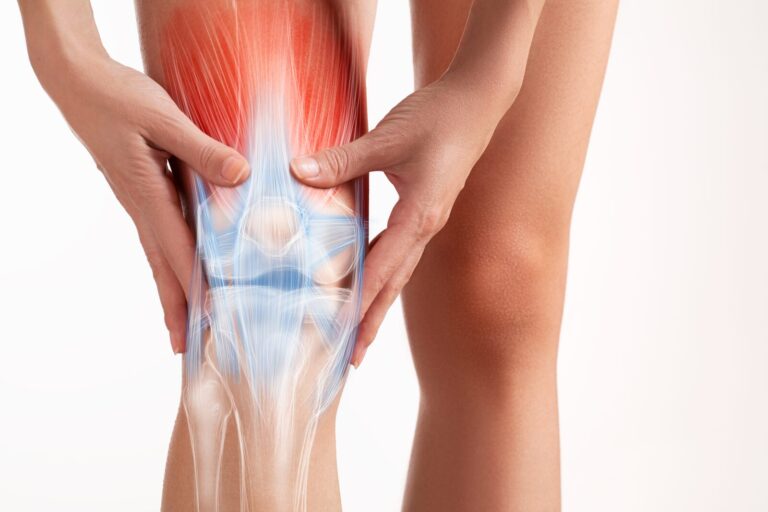
- Managing joint and muscle discomfort before bed. Many women in perimenopause also experience new aches that make it harder to get comfortable at night. Addressing that discomfort — through compression, heat, or gentle recovery routines — can remove one more obstacle between you and a full night’s sleep, even though it treats a contributing factor rather than the hormonal cause directly.
A realistic nightly routine
If you’re looking for somewhere to start, here’s a sequence that reflects the evidence above rather than a marketing wish list:
- Fix your wake time first, not your bedtime — a consistent wake time is the anchor CBT-I is built around.
- Cool the room and the body in the hour before bed. This directly counters the hot-flash-driven awakenings.
- Wind down with something that lowers arousal — that might be a warm-then-cool shower, breathing exercises, or a short session with a recovery device like far-infrared or PEMF therapy if you find it relaxing. Treat it as a signal to your body that the day is ending, not as a medical treatment.
- Talk to your doctor if disrupted sleep has been a near-nightly pattern for more than a few months. That’s the threshold at which it’s worth exploring CBT-I or hormone therapy rather than continuing to manage it alone.
The bottom line
Perimenopausal sleep disruption is real, common, and physiologically explainable — it is not a personal failing or something you should have to quietly tolerate. The strongest evidence points to CBT-I and, where appropriate, hormone therapy as the most effective tools. Supportive recovery habits — cooling the body, calming the nervous system, easing physical discomfort before bed — won’t replace those, but they can genuinely make the nights in between a little easier.
Sources
Findings on the prevalence and mechanisms of perimenopausal sleep disturbance are drawn from published systematic reviews and cohort studies in sleep and menopause research, including work summarised in Frontiers in Neurology (2025) and a narrative review of perimenopausal sleep disturbance (2025). Readers and editors should verify specific figures against the primary literature before publication, as prevalence estimates vary by study population and diagnostic criteria used.
About the Author
Michael Lyons
With three decades of tech and Meditech experience and 15,000 hours of endurance sports coaching and competing at the NZ national team level, Michael’s passion is biohacking recovery and wellness for athletes, for those with short- and long-term medical conditions, and healthy ageing.
Michael consults and partners with leading medical practitioners to provide therapy solutions for short- and long-term illnesses, including diabetes, DVT, lymphedema, pre- and postnatal, post-surgery, autism (ASD), PTSD, and sleep apnea.
On the athlete side, Michael consults and partners with high-performance sports organisations, three Olympic gold medalists, two current world champions, the Rugby World Cup, NZ Rugby, the Singapore Olympic team, the NZ Olympic team, clubs and coaches. He also teaches the recovery modules for the fitness industry’s personal training courses.
Originally Published::

Author:
Michael Lyons is a biohacking and recovery specialist with three decades of tech and Meditech experience and 15,000+ hours in endurance sports coaching.