12 Evidence-Based Tips for Muscle Recovery After Exercise (2026 Update)
Last Updated::
Most advice on muscle recovery after exercise comes with a product attached. A new powder, a new gadget, a new protocol. Yet the research keeps pointing back to the same few basics. Eat enough protein, refuel and rehydrate, sleep well and give hard sessions time to settle before you load the same muscles again.
That doesn’t mean recovery tools are useless. Massage, compression and cold or heat therapy all have studies behind them, and some help more than others. The catch is that each one does a different job, and a few can even work against you if you use them at the wrong time.
This guide brings together 12 evidence-based tips for post workout recovery, updated for 2026. We’ll explain what’s happening inside sore muscles, what to eat and drink, how sleep and rest days fit in, how the popular recovery techniques compare and how long muscle recovery really takes.
What Happens to Your Muscles After a Workout
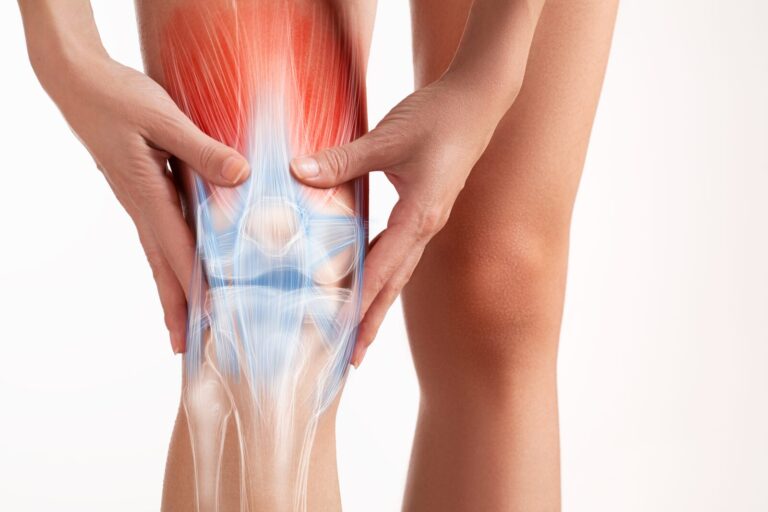
Hard or unfamiliar exercise causes tiny amounts of damage inside muscle cells, especially when muscles lengthen under load, such as lowering a weight or running downhill. A 2018 review by Hotfiel and colleagues describes this as the main cause of delayed onset muscle soreness, or DOMS, with soreness typically peaking 48 to 72 hours after exercise. Stiffness, swelling and a temporary loss of strength often come with it.
Recovery is the process of repairing that damage, refilling energy stores and replacing lost fluid. Your body does most of the work on its own. The tips below are about giving it the right materials and enough time. For a deeper look at the repair process itself, see our guide to muscle recovery after exercise.
Post Workout Recovery Nutrition
1. Eat 20 to 40 Grams of Protein After Training
Protein supplies the amino acids your muscles use for repair. According to the International Society of Sports Nutrition (ISSN) position stand on nutrient timing, a dose of about 20 to 40 grams of high-quality protein stimulates muscle protein synthesis most effectively, and eating protein from straight after exercise up to two hours later produces a strong response.
The exact timing matters less than many people think. The ISSN position stand on protein and exercise found that benefits come from protein eaten before or after a workout, and that the anabolic effect of exercise lasts at least 24 hours. Whole foods such as eggs, dairy, fish, meat and legumes work, and a shake is simply a convenient option.
2. Spread Your Protein Across the Day
Total daily intake matters more than any single meal. The ISSN recommends 1.4 to 2.0 grams of protein per kilogram of body weight per day for most exercising people, ideally split into doses every three to four hours. For an 80 kg athlete, that’s roughly 112 to 160 grams a day.
The same position stand notes that 30 to 40 grams of casein protein before bed increases muscle protein synthesis overnight. A glass of milk or a bowl of Greek yoghurt before sleep is an easy way to do this. Our article on the best foods for post workout muscle recovery has more meal ideas.
3. Refuel Carbohydrates When Sessions Are Close Together
Muscles store carbohydrate as glycogen, their main fuel during hard exercise. If you have less than four hours before your next session, the ISSN nutrient timing position stand advises aggressive refuelling at 1.2 grams of carbohydrate per kilogram of body weight per hour, favouring fast-digesting carbohydrates with a high glycaemic index above 70. Combining 0.8 g/kg per hour of carbohydrate with 0.2 to 0.4 g/kg per hour of protein is another option.
If your next workout is a day or more away, regular meals with enough carbohydrate will usually restore glycogen without special timing. Endurance athletes training at high volume need the most, and the ISSN notes that glycogen stores are maximised on a high-carbohydrate diet of 8 to 12 g/kg per day.
4. Rehydrate Based on Your Own Sweat Losses
Sweat rates vary widely between people, so there’s no single right amount to drink. The American College of Sports Medicine (ACSM) position stand on fluid replacement recommends avoiding a fluid loss of more than 2 percent of body weight during exercise, and suggests weighing yourself before and after training to estimate your own sweat rate.
After exercise, the goal is to replace the fluid and electrolytes you lost. Drinks containing electrolytes and carbohydrate can help more than water alone in some situations, such as long sessions in the heat, according to the ACSM.
5. Consider Creatine Monohydrate
Creatine is one of the most studied sports supplements. The ISSN position stand on creatine reports that creatine supplementation may enhance post-exercise recovery and help athletes tolerate heavy training loads, alongside its better-known effects on high-intensity performance.
The same review found short and long-term use to be safe and well tolerated in healthy people. If you have a medical condition or take regular medication, check with your doctor or pharmacist before starting any supplement.
Sleep and Rest Days
6. Make Sleep Your First Recovery Tool
Sleep is when much of the body’s repair work happens, and athletes often don’t get enough of it. A 2021 expert consensus on sleep and the athlete found elite athletes are particularly prone to habitual short sleep of less than seven hours a night and poor sleep quality. It also notes that habitually sleeping less than seven hours raises the risk of respiratory infection in the wider population.
The experts recommend an individual approach based on how much sleep each athlete feels they need, because a fixed 7 to 9 hours is unlikely to suit everyone. Early training sessions, travel, late competitions and stress are common reasons for short sleep. Our guide to the science behind sleep covers practical ways to improve it.
7. Ease Off for a Day or Two After Hard Sessions
Training through heavy soreness can change how you move. A review of DOMS in Sports Medicine found soreness can reduce range of motion, shock absorption and peak force, and that compensating can put extra stress on ligaments and tendons. It advises athletes who train daily to reduce intensity and duration for one to two days after very damaging sessions, or to train less affected body parts instead.
The same review recommends introducing new or eccentric exercises gradually over one to two weeks. That’s why soreness is often worst at the start of a season or when you try something new.
8. Keep Moving With Active Recovery
Light movement on easy days, such as walking, cycling or gentle swimming, can help you feel better. In a 2018 meta-analysis of 99 studies, active recovery produced a small reduction in DOMS compared with doing nothing. Keep the effort easy enough that you could hold a conversation.
Recovery Techniques Compared
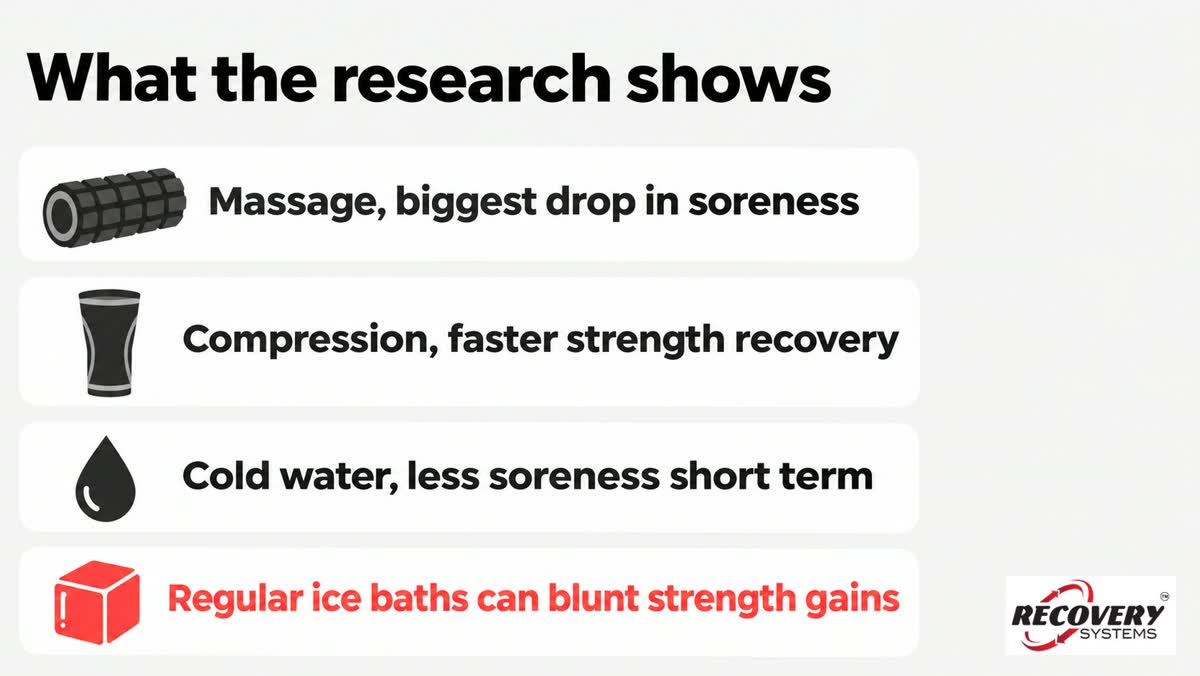
Recovery techniques don’t all do the same thing. Some mainly ease soreness, some help strength return faster, and one can blunt long-term gains if you overuse it. Here’s what the larger reviews show.
9. Book a Massage After Your Hardest Sessions
Massage came out on top in the 2018 meta-analysis by Dupuy and colleagues, which found it was the most effective technique for reducing both DOMS and perceived fatigue. Massage and cold exposure were also the most powerful techniques for lowering markers of inflammation. A trained sports massage therapist is ideal, though foam rolling and handheld massage tools are cheaper ways to apply pressure at home.
10. Use Compression Garments and Compression Boots
Compression has two forms. Compression garments apply a steady squeeze, and a 2017 meta-analysis of 23 studies in Sports Medicine found they gave small but very likely benefits for recovery, with the largest effects on strength recovery, particularly after resistance exercise and more than 24 hours later.
Compression boots use air chambers that inflate and deflate in sequence, a technique called intermittent pneumatic compression. A 2024 meta-analysis in Biology of Sport pooled 17 studies with 319 participants and found a trivial to moderate benefit for pain and soreness and only trivial to small gains in muscle function. In other words, boots can help you feel better between sessions, but they’re a complement to sleep and nutrition, not a replacement. Our article on intermittent pneumatic compression therapy for athletes explains how they work.
If you’d like to try this at home, Recovery Systems Sport air compression recovery boots let you adjust pressure, cycle time, mode and zone. You can browse the Recovery Systems Sport leg compression range.
11. Choose Cold, Heat or Contrast Therapy Based on Your Goal
Cold water immersion reliably eases short-term soreness. A 2021 meta-analysis of 32 randomised controlled trials with 1,098 participants found cold therapy applied within an hour of exercise reduced DOMS pain over the first 24 hours, while heat therapy, especially hot packs, reduced pain both within and beyond 24 hours. There was no significant difference between cold and heat.
The trade-off is long-term adaptation. A 2026 umbrella review of 15 meta-analyses found cold water immersion improved muscular power and jump performance 24 to 48 hours after hard exercise, with protocols of 10 to 15 minutes at 10 to 15 °C appearing most effective. However, it didn’t improve muscular strength and impaired strength and muscle growth gains when used regularly. In a 12-week study of 21 active men, those who used cold water immersion after strength training gained less strength and muscle mass than those who did active recovery.
So, save ice baths for times when you need to perform again soon, such as tournaments, and skip them after strength sessions where muscle growth is the goal. Contrast therapy, alternating hot and cold water, also reduced DOMS in the 2018 meta-analysis.
What to Avoid
12. Go Easy on Alcohol After Training
Alcohol directly interferes with muscle repair. In a 2014 crossover study, eight active men drank large amounts of alcohol, about 12 standard drinks, after a hard training session. Muscle protein synthesis was 24 percent lower than with protein alone, even when the alcohol was taken with protein, and 37 percent lower when it was taken with carbohydrate. If you drink, keep it moderate and well away from your hardest sessions.
How Long Does Muscle Recovery Take?
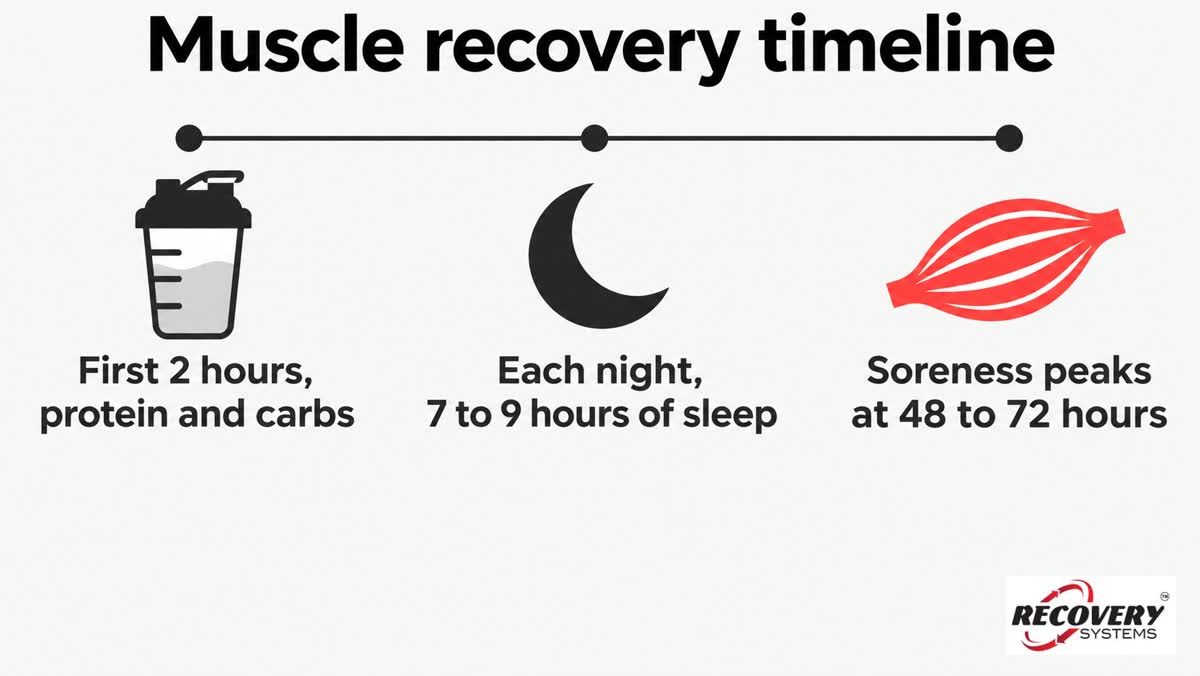
How long muscle recovery takes depends on how hard and how unfamiliar the session was, your training history, sleep, nutrition and stress. Light sessions may need very little recovery, while hard eccentric work can leave muscles sore for several days, with soreness peaking at 48 to 72 hours according to the Hotfiel review.
The repair work itself continues for at least 24 hours after exercise, according to the ISSN. Planning your week so the same muscle groups aren’t trained hard on back-to-back days gives that process room to work. Our tips to recover quickly from DOMS look at the sore days in more detail.
Where the Research Falls Short
Recovery research has real limits. A 2025 umbrella review in Sports Medicine looked at 29 systematic reviews covering 863 trials of physical therapies for DOMS and rated 17 of the reviews as critically low quality, with only two rated high quality. The 2026 umbrella review of cold water immersion also rated the certainty of its evidence as low to very low.
Many trials are small, short and carried out in young, healthy men, so results may not apply to everyone. Most measure soreness, which is subjective, rather than long-term performance. And very few studies compare recovery tools head to head with the basics of sleep and nutrition.
Conclusion
The fastest muscle recovery after exercise still comes from the basics. Eat 20 to 40 grams of protein after training and enough across the day, refuel carbohydrates when sessions are close together, rehydrate, sleep well and ease off after very hard sessions.
Recovery tools can then add to that foundation. Massage has the strongest evidence for soreness, compression helps strength return and makes you feel better between sessions, and cold water works best when you need to perform again soon rather than when you’re training to build muscle.
Frequently Asked Questions
Why Do Muscles Get Sore After a Workout?
Muscles get sore after a workout because hard or unfamiliar exercise causes tiny amounts of damage inside muscle cells, which triggers inflammation as the body repairs them. A 2018 review found this damage is most likely after eccentric exercise, where muscles lengthen under load. Soreness usually peaks 48 to 72 hours later and fades on its own.
What Helps With Sore Muscles After a Workout?
Massage, light activity, compression and cold or heat therapy all help with sore muscles after a workout. In a 2018 meta-analysis of 99 studies, massage was the most effective technique for reducing soreness and fatigue, while active recovery, compression garments, cold water immersion and contrast therapy also reduced soreness. Sleep, protein and fluids support the repair underneath.
Do Post Workout Recovery Drinks Work?
Post workout recovery drinks work as a convenient way to get protein, carbohydrate and fluid after training, but they don’t do anything food can’t. The ISSN recommends 20 to 40 grams of protein after exercise and fast carbohydrates when sessions are close together. The ACSM notes that drinks with electrolytes and carbohydrate can help more than water in some situations.
Is Protein Powder Good for Post Workout Recovery?
Protein powder is good for post workout recovery when it helps you reach your protein target, but it isn’t essential. According to the ISSN, active people can meet their protein needs from whole foods, while supplements are a practical way to get enough high-quality protein, particularly with heavy training. Fast-digesting proteins rich in essential amino acids and leucine, such as whey, are most effective at stimulating muscle repair.
What Is the Best Muscle Recovery Supplement?
Protein and creatine monohydrate have the strongest evidence of any muscle recovery supplement. The ISSN recommends 1.4 to 2.0 g of protein per kg of body weight daily for most exercising people, and its creatine position stand reports creatine may enhance recovery and help athletes handle heavy training. Check with your doctor or pharmacist before starting a supplement if you have a medical condition.
How Do You Treat Extremely Sore Muscles After a Workout?
Extremely sore muscles after a workout usually respond to rest, light movement, massage and heat or cold, but some symptoms need a doctor. MedlinePlus lists dark, red or cola-coloured urine, reduced urine output and muscle weakness as symptoms of rhabdomyolysis, a serious breakdown of muscle tissue that severe exertion can cause. Seek medical help straight away if you notice these.
What Should You Eat for Post Workout Recovery?
For post workout recovery, eat a meal or snack with 20 to 40 grams of protein plus carbohydrate, such as eggs on toast, Greek yoghurt with fruit or chicken with rice. The ISSN found protein eaten from straight after exercise up to two hours later produces a strong muscle building response. Our guide to the best foods for post workout muscle recovery has more ideas.
How Long Does Muscle Recovery Take?
Muscle recovery takes anywhere from a day to several days, depending on how hard and unfamiliar the workout was. After damaging exercise, soreness typically peaks 48 to 72 hours later, according to a 2018 review, and the ISSN notes the muscle building effect of exercise lasts at least 24 hours. Easing off for one to two days after very hard sessions gives muscles time to repair.
How Can I Speed Up Muscle Recovery?
You can speed up muscle recovery by getting the basics right first. That means 20 to 40 grams of protein after training, enough total protein and carbohydrate, fluids to replace sweat losses and enough sleep. On top of that, massage, compression and active recovery reduced soreness in a 2018 meta-analysis, and limiting alcohol helps protect muscle repair.
Is Heat or Cold Better for Sore Muscles After a Workout?
Heat and cold both ease sore muscles after a workout, and neither has been shown to be clearly better. A 2021 meta-analysis of 32 trials found cold therapy within an hour of exercise reduced pain over the first 24 hours, while heat, especially hot packs, reduced pain both within and beyond 24 hours. Regular cold water immersion after strength training may reduce muscle gains, so heat may suit strength athletes better.
Are Sore Muscles After a Workout a Good Sign?
Sore muscles after a workout mainly show that the exercise was unfamiliar or heavy on eccentric movements, not that the session was better than others. A 2018 review describes DOMS as a mild form of muscle injury that temporarily reduces strength and range of motion. Soreness usually fades as your body adapts to the same exercise, so judge progress by performance rather than pain.
Do Compression Boots Help Muscle Recovery?
Compression boots help muscle recovery modestly, mainly by easing soreness. A 2024 meta-analysis of 17 studies found a trivial to moderate benefit for pain and soreness and only trivial to small gains in muscle function. Most studies used sessions of 20 to 30 minutes at around 80 mmHg. See our guide to what happens to your muscles during compression therapy.
Does Massage Help Sore Muscles?
Massage helps sore muscles more than any other recovery technique studied so far. A 2018 meta-analysis of 99 studies found massage was the most effective method for reducing both DOMS and perceived fatigue, and one of the most effective for lowering inflammation markers. A 2025 umbrella review also found massage reduced soreness at 24 to 72 hours after exercise.
Does Alcohol Slow Muscle Recovery?
Alcohol slows muscle recovery by reducing muscle protein synthesis after training. In a 2014 study, heavy drinking after a hard session lowered muscle protein synthesis by 24 percent compared with protein alone, even when protein was taken with the alcohol. Keeping alcohol moderate, and away from your hardest training days, protects the repair process.
How Much Sleep Do Athletes Need for Recovery?
Athletes should aim for at least seven hours of sleep a night for recovery, and the right amount varies from person to person. A 2021 expert consensus found elite athletes often sleep less than seven hours and recommends an individual approach based on each athlete’s perceived sleep needs, rather than a fixed 7 to 9 hours. Our guide to the science behind sleep has practical tips.
WRITTEN BY
Michael Lyons
Michael Lyons is a recovery specialist with three decades of tech and Meditech experience and 15,000+ hours in endurance sports coaching. The author is not a licensed physician or medical professional. The health information in this article represents the author’s research and personal perspective, not professional medical advice.
MEDICALLY REVIEWED BY
Ayman Shafique, PharmD
Ayman Shafique is a licensed pharmacist with expertise in pharmacology and medical writing. Her work focuses on reviewing and developing evidence-based health and wellness content, ensuring scientific accuracy, clarity, and alignment with current pharmaceutical research. She specialises in translating complex pharmacological and medical information into accessible, reliable content for public and professional audiences.
Medical Disclaimer
This article is for informational and educational purposes only and should not be considered medical advice. The author is a recovery specialist, not a licensed medical doctor or healthcare provider. Health-related claims discussed in this article are based on emerging research and should not replace professional medical consultation. Individual results may vary. Before using any compression therapy device or making health decisions based on this article, please consult a qualified healthcare professional, especially if you have pre-existing medical conditions, a known or suspected blood clot, heart or circulation problems, are pregnant, have implanted medical devices such as pacemakers, or are taking medications.
Commercial Disclosure
This website sells compression therapy products, including air compression recovery boots. The author and company have a commercial interest in promoting these products. Content is written to be as accurate and balanced as possible.
References
American College of Sports Medicine, Sawka, M. N., Burke, L. M., Eichner, E. R., Maughan, R. J., Montain, S. J., & Stachenfeld, N. S. (2007). American College of Sports Medicine position stand. Exercise and fluid replacement. Medicine and Science in Sports and Exercise, 39(2), 377–390. https://doi.org/10.1249/mss.0b013e31802ca597
Berjisian, E., Miraftabi, H., Ihsan, M., Homer, K. A., Kendall, K., Roberts, L., & Abbiss, C. (2026). Strategic application of post-exercise cold-water immersion to enhance performance recovery and adaptation: An umbrella review of 15 published systematic reviews with meta-analysis. Sports Medicine Open, 12(1). https://doi.org/10.1186/s40798-026-01116-8
Brown, F., Gissane, C., Howatson, G., van Someren, K., Pedlar, C., & Hill, J. (2017). Compression garments and recovery from exercise: A meta-analysis. Sports Medicine, 47(11), 2245–2267. https://doi.org/10.1007/s40279-017-0728-9
Cheung, K., Hume, P., & Maxwell, L. (2003). Delayed onset muscle soreness: Treatment strategies and performance factors. Sports Medicine, 33(2), 145–164. https://doi.org/10.2165/00007256-200333020-00005
Dupuy, O., Douzi, W., Theurot, D., Bosquet, L., & Dugué, B. (2018). An evidence-based approach for choosing post-exercise recovery techniques to reduce markers of muscle damage, soreness, fatigue, and inflammation: A systematic review with meta-analysis. Frontiers in Physiology, 9, 403. https://doi.org/10.3389/fphys.2018.00403
Hotfiel, T., Freiwald, J., Hoppe, M. W., Lutter, C., Forst, R., Grim, C., Bloch, W., Hüttel, M., & Heiss, R. (2018). Advances in delayed-onset muscle soreness (DOMS): Part I: Pathogenesis and diagnostics. Sportverletzung Sportschaden, 32(4), 243–250. https://doi.org/10.1055/a-0753-1884
Jäger, R., Kerksick, C. M., Campbell, B. I., Cribb, P. J., Wells, S. D., Skwiat, T. M., Purpura, M., Ziegenfuss, T. N., Ferrando, A. A., Arent, S. M., Smith-Ryan, A. E., Stout, J. R., Arciero, P. J., Ormsbee, M. J., Taylor, L. W., Wilborn, C. D., Kalman, D. S., Kreider, R. B., Willoughby, D. S., . . . Antonio, J. (2017). International Society of Sports Nutrition position stand: Protein and exercise. Journal of the International Society of Sports Nutrition, 14, 20. https://doi.org/10.1186/s12970-017-0177-8
Kerksick, C. M., Arent, S., Schoenfeld, B. J., Stout, J. R., Campbell, B., Wilborn, C. D., Taylor, L., Kalman, D., Smith-Ryan, A. E., Kreider, R. B., Willoughby, D., Arciero, P. J., VanDusseldorp, T. A., Ormsbee, M. J., Wildman, R., Greenwood, M., Ziegenfuss, T. N., Aragon, A. A., & Antonio, J. (2017). International society of sports nutrition position stand: Nutrient timing. Journal of the International Society of Sports Nutrition, 14, 33. https://doi.org/10.1186/s12970-017-0189-4
Kreider, R. B., Kalman, D. S., Antonio, J., Ziegenfuss, T. N., Wildman, R., Collins, R., Candow, D. G., Kleiner, S. M., Almada, A. L., & Lopez, H. L. (2017). International Society of Sports Nutrition position stand: Safety and efficacy of creatine supplementation in exercise, sport, and medicine. Journal of the International Society of Sports Nutrition, 14, 18. https://doi.org/10.1186/s12970-017-0173-z
Maia, F., Nakamura, F. Y., Sarmento, H., Marcelino, R., & Ribeiro, J. (2024). Effects of lower-limb intermittent pneumatic compression on sports recovery: A systematic review and meta-analysis. Biology of Sport, 41(4), 263–275. https://doi.org/10.5114/biolsport.2024.133665
National Library of Medicine. (n.d.). Rhabdomyolysis. MedlinePlus Medical Encyclopedia. Retrieved November 7, 2026, from https://medlineplus.gov/ency/article/000473.htm
Parr, E. B., Camera, D. M., Areta, J. L., Burke, L. M., Phillips, S. M., Hawley, J. A., & Coffey, V. G. (2014). Alcohol ingestion impairs maximal post-exercise rates of myofibrillar protein synthesis following a single bout of concurrent training. PLoS ONE, 9(2), e88384. https://doi.org/10.1371/journal.pone.0088384
Roberts, L. A., Raastad, T., Markworth, J. F., Figueiredo, V. C., Egner, I. M., Shield, A., Cameron-Smith, D., Coombes, J. S., & Peake, J. M. (2015). Post-exercise cold water immersion attenuates acute anabolic signalling and long-term adaptations in muscle to strength training. The Journal of Physiology, 593(18), 4285–4301. https://doi.org/10.1113/JP270570
Walsh, N. P., Halson, S. L., Sargent, C., Roach, G. D., Nédélec, M., Gupta, L., Leeder, J., Fullagar, H. H., Coutts, A. J., Edwards, B. J., Pullinger, S. A., Robertson, C. M., Burniston, J. G., Lastella, M., Le Meur, Y., Hausswirth, C., Bender, A. M., Grandner, M. A., & Samuels, C. H. (2021). Sleep and the athlete: Narrative review and 2021 expert consensus recommendations. British Journal of Sports Medicine, 55(7), 356–368. https://doi.org/10.1136/bjsports-2020-102025
Wang, Y., Li, S., Zhang, Y., Chen, Y., Yan, F., Han, L., & Ma, Y. (2021). Heat and cold therapy reduce pain in patients with delayed onset muscle soreness: A systematic review and meta-analysis of 32 randomized controlled trials. Physical Therapy in Sport, 48, 177–187. https://doi.org/10.1016/j.ptsp.2021.01.004
Wiecha, S., Cieśliński, I., Wiśniowski, P., Cieśliński, M., Pawliczek, W., Posadzki, P., Prill, R., Zając, J., & Płaszewski, M. (2025). Physical therapies for delayed-onset muscle soreness: An umbrella and mapping systematic review with meta-meta-analysis. Sports Medicine, 55(5), 1183–1212. https://doi.org/10.1007/s40279-025-02187-5
Originally Published::
Author:
Michael Lyons is a biohacking and recovery specialist with three decades of tech and Meditech experience and 15,000+ hours in endurance sports coaching.