The Most Common Running Injuries and How to Treat Them
Last Updated::
Running has become one of the most popular ways to improve and maintain fitness. In fact, more than 1 million Americans run regularly.
While running supports cardiovascular health and mental well-being, it also carries a risk of injury, especially from overuse. A large portion of running injuries stem from doing too much, too soon, or without adequate recovery time.
This guide breaks down the most common types of running injuries based on updated patterns, not just knees and shins, but also areas like the hips, spine, and even nerves, plus symptoms, treatment, and prevention strategies.
1. Hip Flexor Strain (Front Hip Muscle Pull)
What It Is
Hip flexors lift your leg during a stride. When they’re tight or overused, they can become strained, especially in hill runners or sprinters.
Symptoms
- Sharp pain or pulling at the front of the hip
- Pain when walking uphill or lifting the leg
- Tenderness in the groin fold
How to Prevent It
- Warm up with leg swings and hip openers
- Strengthen core and glutes to reduce overuse
- Avoid steep hills or long strides when tired
2. Gluteal Tendinopathy (Outer Hip Tendon Pain)
What It Is
The gluteal tendons stabilize your pelvis while running. Weakness or overuse can lead to pain in the tendons near the outer hip.
Symptoms
- Dull pain on the outside of the hip
- Pain while lying on the affected side
- Discomfort when walking stairs or on slopes
How to Prevent It
- Strengthen the gluteus medius and hip abductors
- Avoid side-sleeping or crossing legs
- Include single-leg strength and stability drills
- Use recovery strategies that reduce load on fatigued muscles and tendons. Compression therapy, for example, can improve circulation and ease soreness in the hips and legs, making it easier to return to training without aggravating the tendon.
3. Lumbar Strain (Lower Back Pain)
What It Is
Runners with weak core muscles or poor posture can develop tightness or strain in the lower back, especially after long runs.
Symptoms
- Aching or stiffness in the lower back
- Pain after long runs on hard surfaces
- Relief with movement but returns after rest
How to Prevent It
- Strengthen the core and posterior chain
- Run tall — avoid leaning forward
- Use foam rolling and hip mobility exercises
4. Piriformis Syndrome (Deep Buttock Muscle Pressure)
What It Is
The piriformis muscle runs deep in the buttocks and can irritate the sciatic nerve when inflamed, causing radiating leg pain.
Symptoms
- Deep ache in the buttock
- Pain that travels down the leg
- Worse after sitting or long runs
How to Prevent It
- Stretch the piriformis and surrounding hip muscles
- Strengthen glutes to support running form
- Avoid sitting for long periods without breaks
5. Medial Knee Pain (Inner Knee Bursitis)
What It Is
Pain at the inner knee often stems from inflammation in a small fluid-filled sac near tendon insertions — common in hill runners.
Symptoms
- Pain on the inner side of the knee
- Swelling or warmth below the joint
- Worse with stairs or uphill runs
How to Prevent It
- Strengthen inner thighs, hamstrings, and glutes
- Wear supportive running shoes to correct overpronation
- Avoid repetitive hill climbs
6. Posterior Tibial Tendinopathy (Collapsed Arch Pain)
What It Is
The posterior tibial tendon supports your foot arch. Overuse or flat feet can lead to inflammation and arch collapse.
Symptoms
- Pain along the inner ankle or arch
- Arch visibly collapses when standing
- Tenderness behind the ankle bone
How to Prevent It
- Use orthotics or arch-support shoes
- Strengthen intrinsic foot muscles
- Reduce volume when foot ache after running occurs
For those dealing with foot issues, compression therapy can provide relief. Shereen Deppe found that it “seems to have assisted with my newly developed Plantar Fasciitis, easing the pain” while maintaining her active schedule.
7. Tarsal Tunnel Syndrome (Pinched Nerve in Ankle)
What It Is
Like carpal tunnel for your foot, this condition compresses the tibial nerve near the inner ankle, often due to overuse or tight footwear.
Symptoms
- Tingling, burning, or numbness in the sole or arch
- Pain that worsens with running
- Relief with rest or elevation
How to Prevent It
- Avoid tight shoes and over-lacing
- Strengthen ankle and foot stability muscles
- Run on even terrain to minimize impact
8. Heel Bruising (Fat Pad Injury)
What It Is
This is a direct injury to the fat pad under the heel — not to be confused with plantar fasciitis — usually caused by hard surface running.
Symptoms
- Sharp, focused pain in the heel center
- Worse with heel strikes
- No arch involvement
How to Prevent It
- Use cushioned insoles or running shoes with heel padding
- Avoid running on concrete
- Rest until pain fades
9. Hamstring Tendinopathy (Upper Hamstring Overuse)
What It Is
This condition affects the hamstring tendon near the sit bone and is common in long-distance runners.
Symptoms
- Deep buttock pain when sitting or sprinting
- Weakness in hip extension
- Pain during hamstring curls or bridges
How to Prevent It
- Focus on eccentric hamstring strength
- Improve glute coordination
- Avoid over-stretching or long static holds
10. Second Toe Capsulitis (Ball of Foot Inflammation)
What It Is
Capsulitis is inflammation in the joint capsule beneath the second toe, often due to repetitive pressure during toe-off.
Symptoms
- Pain at the ball of the foot
- Swelling or a thickened callus under the second toe
- Worse when barefoot or in minimal shoes
How to Prevent It
- Use metatarsal pads or rockered shoes
- Strengthen toe flexors and arch stabilizers
- Avoid pushing off from the forefoot aggressively
11. Runner’s Knee (Patellofemoral Pain Syndrome)
What It Is
Runner’s knee is caused by improper tracking of the kneecap and strain on cartilage from repetitive impact.
Symptoms
- Dull pain around or behind the kneecap
- Pain with stairs, squatting, or sitting long
- Popping or grinding with movement
How to Prevent It
- Strengthen quads, glutes, and hips
- Avoid deep knee bends
- Use orthotics or taping if needed
12. Achilles Tendinitis (Back of Heel Inflammation)
What It Is
Inflammation in the tendon connecting the calf to the heel — common with rapid mileage increases or weak calf control.
Symptoms
- Morning stiffness above the heel
- Pain worsens with uphill or long runs
- Swelling or thickening at the tendon
How to Prevent It
- Strengthen calves with heel drops
- Wear shoes with a slight heel lift
- Increase mileage gradually
13. IT Band Syndrome (Outer Knee Band Pain)
What It Is
The iliotibial (IT) band runs along your outer thigh. When tight or inflamed, it rubs against the outer knee and causes pain.
Symptoms
- Sharp or burning pain on the outside of the knee
- Worse on long runs or downhill
- Tenderness along the outer thigh
How to Prevent It
- Foam roll your IT band and quads
- Strengthen hip stabilizers
- Avoid side-sloped or uneven surfaces
Other Injuries to Know
Aside from the more structured overuse injuries, runners can also experience:
- Inguinal strains (groin pulls): Often from sprinting or trail running with sudden, sharp changes in direction.
- Thoracic outlet symptoms (arm tingling and numbness): Tingling in the arms during long runs, usually caused by poor shoulder posture or nerves getting pinched near the collarbone.
- Neck strain (tight or sore neck muscles): Usually due to poor posture, especially in runners who look down or carry tension in the shoulders.
- Blisters (skin irritation from rubbing): Caused by repeated friction, and made worse by moisture, sweat, or poorly fitting running shoes.
- Toenail trauma (black toenail) (bruised toenail): Happens when toes hit the front of the shoe repeatedly — common in downhill running or when shoes are too tight.
Treatment Options
Many running injuries can improve significantly with a targeted recovery plan. Here are the most effective treatment approaches for getting back on track — and staying there.
If you’re experiencing pain or soreness, scale back your running volume. This doesn’t always mean total rest — but it does mean avoiding aggravating activities. Cross-training with low-impact options like swimming, cycling, or walking can help maintain fitness while reducing joint stress. Always stop if the pain becomes sharp or worsens.
Building muscular strength and correcting imbalances are essential for preventing reinjury. Focus on strengthening your glutes, core, hips, and stabilizing muscles. A licensed physical therapist can help identify weak areas and build a custom rehabilitation plan suited to your injury and biomechanics.
- Ice and Anti-Inflammatory Care
Applying ice to the affected area for 10–15 minutes after running can reduce swelling and provide short-term pain relief. Over-the-counter NSAIDs (like ibuprofen) may help manage acute inflammation, but prolonged use should be avoided unless directed by a healthcare provider.
Your choice of footwear plays a major role in injury recovery and prevention. Ensure your running shoes match your foot shape, arch type, and running gait. Additional tools like orthotics, arch supports, or heel lifts can help redistribute pressure and reduce mechanical stress. Replace worn-out shoes every 300–500 miles.
- Compression Therapy (Focus on Compression Boots)
One of the most effective and convenient ways to speed up recovery is through compression therapy, especially using compression boots.
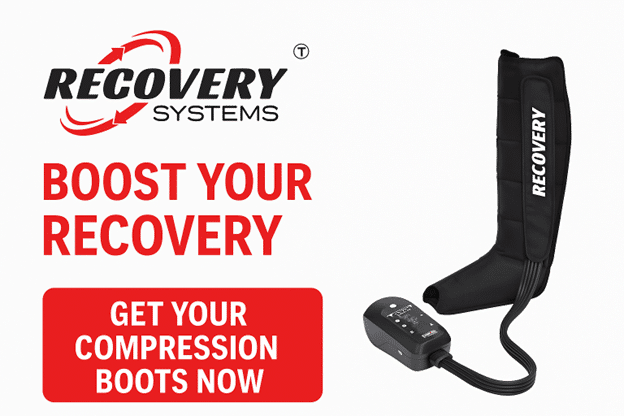
Compression boots — like those offered by Recovery Systems — are air-powered leg devices that deliver sequential pressure to your lower limbs. They mimic your body’s natural muscle pump to:
- Reduce muscle soreness and fatigue
- Boost circulation and lymphatic drainage
- Flush out lactic acid and other waste
- Decrease swelling and fluid buildup
- Relieve leg heaviness after long runs or training blocks
These boots offer a passive yet powerful recovery solution for runners logging high mileage or training for races. Whether you’re dealing with sore calves, general leg fatigue, or just need to bounce back faster, compression boots are an excellent home-based recovery option — no massage therapist required.
What makes this approach particularly appealing to athletes is its convenience. World Moto X Champion Courtney Duncan is “so glad to have my Recovery Systems to give me faster healing and recovery daily from the sport I love.” Similarly, World Vertical Marathon Champion Suzy Walsham enjoys “jumping into the boots in the mornings after training” and finds they help “reduce any soreness/recovery time.”
Many athletes appreciate being able to use recovery systems while relaxing. Taylor Seah finds the experience so comfortable that he “just sleeps throughout the night on it.” The portability factor is also crucial for traveling athletes. As New Zealand long-distance triathlete Amelia Rose Watkinson explains: “The best thing about recovery systems is that it is portable. This advantage allows me to take the system to every overseas race that I have and not worry about heavy or lactic legs before and after races.”
Originally Published::

Author:
Michael Lyons is a biohacking and recovery specialist with three decades of tech and Meditech experience and 15,000+ hours in endurance sports coaching.