
Compression Boots for Muscle Recovery, What the Science Shows
Last Updated::
Your legs still feel heavy two days after a hard session, and the next workout is already on the calendar. That’s when many athletes reach for compression boots, hoping to bounce back faster. The real question is what compression boots for muscle recovery actually do, and whether they help you train harder tomorrow.
That matters because your recovery time is limited, and muscle recovery boots get a lot of credit. Flushing lactate, draining swelling, reducing soreness, and speeding up repair are separate claims. Research tests them separately, and the answers aren’t the same for each. Some hold up well, some only partly, and a few barely at all.
So this guide works through the science in order. It starts with what compression boots are and what happens in your legs after hard training. Then it looks at what the boots change in your legs, what the research shows they can and can’t do, how studies have used them, and where the evidence is still thin.
What Are Compression Boots?
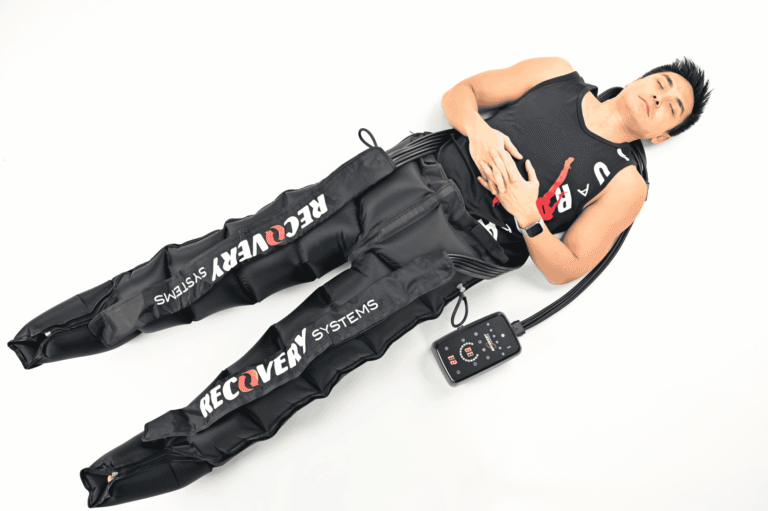
Compression boots are inflatable sleeves that cover the leg from the foot to the thigh or hip and connect to a small air pump via hoses. The pump inflates and deflates air chambers in cycles, either all at once or one after another, as described in the 2024 Biology of Sport meta-analysis. Researchers call this intermittent pneumatic compression, or IPC, where pneumatic simply means air driven. You’ll also see them sold as air compression boots, leg compression recovery boots or blood circulation boots.
Pressure is measured in mmHg, short for millimetres of mercury, the same unit used for blood pressure. A 2024 meta-analysis in Biology of Sport found that most sports studies used 20- to 30-minute sessions at about 80 mmHg. That’s very different from static compression garments like socks and tights, which apply a constant squeeze. A 2017 Sports Medicine meta-analysis grouped garment studies at pressures below and above 15 mmHg, far lower than most boot protocols. For a shorter overview of the device itself, see what compression boots are and why athletes use them.
What Happens in Your Legs After Hard Training
DOMS, short for delayed onset muscle soreness, is the stiff, tender feeling that builds a day or two after hard or unfamiliar exercise. A 2026 systematic review in Frontiers in Sports and Active Living concluded that DOMS can’t be explained by muscle damage alone. It reflects a mix of small structural injuries in the muscle, local inflammation and sensitised pain nerves, and the blend differs between endurance, strength and jumping work.
Hard training also shifts fluid. Researchers behind a 2024 crossover trial in the European Journal of Applied Physiology describe exercise-induced fluid buildup in the tissues as one of the things compression aims to reduce, and MedlinePlus lists standing for long periods as a common cause of leg swelling. That’s why legs can feel heavy, tight, and sore. Compression boots target the fluid side of the problem, and the next question is whether moving fluid actually changes muscle recovery. For practical steps beyond devices, here are practical ways to recover from DOMS.
What Compression Boots Change in Your Legs
Compression boots are designed to mimic the skeletal muscle pump, the squeeze that working calf and thigh muscles give veins to push blood back to the heart. That return trip is called venous return. Blood flow rises while the boots run, but only for a short time. A 2024 double-blind crossover study of athletes found blood flow velocity rose during 15-minute sessions in 22 soccer and track and field athletes, with larger changes at 200 mmHg than at 80 mmHg, but values returned to baseline within two minutes after each session ended.
Compression boots also seem to affect the muscle during exercise. In a 2026 study in Frontiers in Physiology, 59 healthy adults wore a sleeve on one leg for 30 minutes at 90 mmHg. Calf muscle oxygen saturation rose from 75.7 percent to 81.2 percent, and MRI scans showed less fluid in the muscle afterward.
There’s a whole body effect too. A 2024 crossover trial in the European Journal of Applied Physiology had 16 volunteers do eight all-out cycling sprints, then 30 minutes of IPC or a sham. With IPC, blood pressure and peripheral vascular resistance returned toward pre-exercise values faster. A 2025 sham-controlled crossover study in Physiological Reports of 19 healthy young adults also found arterial stiffness fell after a single 30-minute session at 70 to 80 mmHg.
What the Research Shows Compression Boots Do for Muscle Recovery
Those changes in blood flow and fluid are real, but they’re short-lived. So the more useful question is which recovery outcomes they actually shift. The benefits of compression boots show up most clearly in how your legs feel, with smaller and less consistent effects on how they function.
- Muscle Soreness and DOMS
The evidence is strongest for soreness. A 2025 meta-analysis in the Strength and Conditioning Journal pooled 27 studies covering 554 healthy adults and found a small but statistically significant drop in soreness and pain. The authors still concluded the evidence was too limited for firm recommendations. The 2024 Biology of Sport meta-analysis of 17 studies and 319 participants likewise reported a trivial-to-moderate effect on soreness.
Individual trials vary. In a 2025 randomised controlled trial in PM&R, 20 untrained men used IPC for 15 minutes straight after plyometric jumps and again at 24, 48 and 72 hours. They reported less soreness than controls at 48 and 72 hours. A 2025 placebo-controlled trial of 33 active men found soreness only trended lower after 30 minutes at 200 mmHg, with no statistically significant difference from a fake treatment. So the honest summary on compression boots and muscle soreness is a small benefit that not every study detects.
- Perceived Recovery
How recovered you feel follows a similar pattern. In a 2026 sham-controlled crossover trial, 21 high-level road cyclists used 30 minutes of high-pressure compression after an all-out time trial. They reported better perceived recovery, less soreness and less fatigue than after the sham. A 2015 exploratory study at an Olympic Training Center also found 15 minutes of compression after morning training raised pressure to pain threshold, a measure of muscle tenderness, in 24 athletes, and the effect lasted through the afternoon session. In a 2025 randomised trial in Biology of Sport, 17 handball players who used compression daily for five weeks reported slightly better morning recovery than players who didn’t.
- Range of Motion and Muscle Function
Flexibility is one of the more surprising findings, although it rests on small studies. In a 2014 crossover study in the Journal of Strength and Conditioning Research, nine people experienced in stretching improved their forward splits by 25.3 to 33.3 percent after 15 minutes of compression at about 70 mmHg, compared with 1.0 to 12.2 percent in uninflated sleeves. A 2017 exploratory trial in PLOS ONE found knee flexibility dropped after three days of heavy squats in a sham group but held steady with compression.
Muscle function measures look more mixed. A 2025 randomised trial in Scientific Reports of 48 combat sports athletes found that compression improved tissue blood flow and muscle elasticity compared with passive rest, and the 100 mmHg setting kept elasticity higher for up to 48 hours. The 2026 cyclist trial also found faster recovery of knee extension strength, which makes these some of the more encouraging recent results for compression boots for muscle recovery.
- Swelling and Leg Comfort
Swelling is the outcome most closely tied to what the device physically does. In a 2021 crossover study in Medicine, 20 healthy adults whose jobs kept them on their feet used IPC for 30 minutes after work. Leg pain and calf circumference improved more than with simple rest, with no adverse events reported. Leg volume fell in every condition, including rest, so the added benefit of compression boots over putting your feet up was modest. It’s still the clearest direct evidence on compression boots for swelling in healthy adults, and it fits the reduced muscle fluid seen on MRI in the 2026 study.
What Compression Boots Don’t Do
Feeling better isn’t the same as performing better, and this is where the research gets sobering. In the 2026 cyclist trial, the gains in perceived recovery didn’t translate into a faster 4-minute time trial 24 hours later. A 2018 crossover trial in 21 trained cyclists found that 30 minutes in boots between two efforts had only a trivial effect on time-trial power. In a 2016 randomised trial after the 161 km Western States race, compression lowered fatigue scores straight after treatment, but 400 m run times on days 3 and 5 were no better than with rest.
Recent field studies point the same way. A 2026 study in female basketball players found IPC was no more effective than passive recovery at limiting the drop in jump performance after practice. That’s a useful reminder that boots seem to change how legs feel more than how much force they produce the next day.
- Lactate, Muscle Damage and Inflammatory Markers
The lactate flushing claim has some support but little payoff. A 2015 crossover study in the Journal of Strength and Conditioning Research found blood lactate was lower with compression at 25 and 35 minutes after two all-out sprints, yet power in the next sprint was the same. The 2018 cyclist trial found an unclear effect on lactate clearance.
Blood markers of muscle damage are inconsistent. A 2021 randomised trial in BMC Sports Science, Medicine and Rehabilitation of 45 men found no difference in creatine kinase, or CK, an enzyme that leaks from damaged muscle, compared with sham after 100 drop jumps. A 2025 crossover trial in under-20 soccer players found CK fell by 138.0 U/L after IPC, but that change wasn’t statistically significant. Inflammation looks similar, as a 2017 sham-controlled trial in the European Journal of Applied Physiology of 18 trained men found compression made no difference to C reactive protein, a common inflammation marker, over three days of interval training. Pooled data also disagree on muscle damage: the 2025 Strength and Conditioning Journal meta-analysis found a small, statistically significant effect on CK, while the 2024 Biology of Sport meta-analysis called the effect highly variable.
- The Placebo and Sham Question
Placebo and sham effects in compression boots are a real problem for researchers because you always know when the boots are squeezing. Better trials use a believable fake treatment. In a 2026 placebo-controlled trial in international-level youth soccer players, 30 minutes at 200 mmHg did no better than a moisturising cream presented as a recovery product, across 42 observations from 23 players.
Reviews that weigh this carefully are cautious. A 2025 meta-analysis in the Journal of Bodywork and Movement Therapies rated the evidence as moderate certainty that IPC after exercise doesn’t reduce soreness at 24 hours. A 2026 network meta-analysis of endurance athletes found no recovery method beat passive rest, and a sham treatment ranked as well as the active ones, which suggests expectation explains a lot of what athletes feel. If you’re weighing boots against other tools, here’s how compression boots compare with ice baths and massage guns.
How Studies Have Used Compression Boots
No single protocol is agreed upon, but the studies above follow a few common patterns. These are what researchers tested, not a prescription.
- On how long to wear compression boots, most sessions lasted 20 to 30 minutes at around 80 mmHg, according to the Biology of Sport review.
- Recent trials tested 200 mmHg for 30 minutes, including a 2025 placebo-controlled trial of 33 active men and a 2026 placebo-controlled trial in youth soccer players, and neither found faster recovery of jump height.
- Some protocols repeated short sessions, such as the 2025 PM&R trial, which used 15 minutes immediately after exercise and again at 24, 48, and 72 hours.
- A 2025 trial in competitive handball players tested daily 30-minute sessions for five weeks, with pressure rising from 85 to 95 mmHg.
- Using boots before activity rather than after is a separate question, covered in using compression boots as part of a warm up.
Compression isn’t right for everyone. An evidence review of IPC devices in Emergency Medicine International lists deep vein thrombosis and pulmonary embolism as contraindications and notes that excessive pressure can cause skin injury or reduce blood supply to the limb. Check with your doctor first if you have a known or suspected blood clot, heart failure, severe peripheral vascular disease, leg ulcers, open wounds, skin infections, unexplained swelling, a recent injury or surgery, or if you’re pregnant.
Where the Research Falls Short
Most compression boot trials are small. In the 2024 meta-analysis in Biology of Sport, the 17 trials ranged from 9 to 47 participants, 10 studied men only, and the authors described their statistical power as generally low. Protocols also ranged from 15 to 60 minutes and from 60 to about 235 mmHg, making studies hard to compare, so results may not apply equally to women, older adults, or casual exercisers.
The reviews themselves don’t agree. A 2025 review in the Journal of Bodywork and Movement Therapies found only six studies comparing boots with other recovery methods, and none showed boots were better or worse. A 2023 narrative review in Sports placed recovery boots among tools with lower evidence and mixed results. Fatigue also has a nervous-system side that boots don’t target, which this guide covers under central nervous system fatigue.
If you’d like to try sequential compression at home, the Black Max Pro leg compression boots use a six-chamber design with four recovery modes and long battery life, so you can use them after training or while travelling.
Conclusion
Compression boots for muscle recovery can measurably change what happens in your legs. They raise blood flow and oxygen while they’re running, move fluid out of the muscle, and two of the three meta-analyses in this guide found a small drop in muscle soreness. Some trials also show better short-term flexibility and perceived recovery.
They don’t reliably restore strength, power, or speed faster than rest, and the best placebo-controlled trials show how much of the benefit may come from expectation. The honest takeaway is that muscle recovery boots are a reasonable comfort and recovery tool, not a shortcut to faster physical repair.
Frequently Asked Questions
What Does a Recovery Boot Do?
A recovery boot, also called a compression boot, squeezes your leg in waves, usually from the foot upward, to mimic the muscle pump that pushes blood back toward the heart. A 2024 study of athletes found that blood flow velocity rose during sessions and returned to near baseline within two minutes. A 2026 Frontiers in Physiology study found 30 minutes raised calf oxygen saturation and reduced fluid in the muscle. The researchers describe these changes as how compression devices support recovery after exercise.
Do Recovery Boots Actually Work?
Recovery boots, also called compression boots, work for some outcomes but not others. The 2025 Strength and Conditioning Journal meta-analysis of 27 studies found a small, significant drop in soreness and pain. Placebo controlled trials, including a 2026 study in youth soccer players, found no faster recovery of jump height, muscle fatigue or CK. So recovery boots may help you feel better between sessions, but the evidence doesn’t show they speed up physical recovery after a single use. Whether that’s worth it depends on how much you value the comfort.
What Is the Best Device to Improve Circulation in the Feet?
There’s no single best device because poor circulation in the feet has different causes, and the right fix depends on yours. One foot feeling colder than the other, pale or blue skin, leg pain when walking, and sores on the toes or feet that heal slowly can all signal peripheral artery disease, which needs a doctor’s assessment. A 2001 review notes that IPC has been used to improve circulation in people with leg artery disease, but as a medical treatment. In healthy adults, a 2026 study found compression raised muscle oxygen saturation at the calf during a session, not in the feet.
What Are the Best Compression Boots for Circulation?
The best compression boots for circulation have sequential chambers and adjustable pressure because those features are linked to larger or longer changes in blood flow. A 2026 pilot study found sequential compression kept venous flow raised for 4.49 seconds per cycle, compared with 1.85 seconds when the whole leg was squeezed at once. A 2024 study in athletes found greater flow changes at 200 mmHg than at 80 mmHg, although flow returned close to baseline within two minutes after each session ended. If poor circulation is a symptom rather than heavy legs after training, see a doctor first.
Will Compression Boots Help Lymphedema?
Lymphedema is a medical condition, which MedlinePlus describes as swelling that happens when lymph builds up in the body’s soft tissues, and IPC is used as part of its care under clinical supervision. A 2024 scoping review in Lymphology of 49 studies found that IPC, with or without manual lymphatic drainage, improved limb volume, although results varied by treatment protocol. Clinical protocols also differ from sports use, with sessions of 45 to 120 minutes. A sports recovery device isn’t a substitute for that care, so if you have lymphedema or lipedema, talk to your treating clinician before using compression boots of any kind.
Do Compression Boots Help Lymphatic Drainage?
Compression boots can move lymph, but the strongest evidence comes from people with lymphedema rather than athletes. The 2017 Lymphatic Research and Biology study tracked lymph in real time and found sequential, higher-pressure settings moved it faster in patients, while settings made no significant difference in healthy volunteers. That’s why lymphatic drainage boots marketed to healthy people promise more than the research currently shows. The fluid reduction seen on MRI in the 2026 Frontiers in Physiology study is encouraging, but it was measured right after one session.
What Are the Best Compression Boots for Lymphatic Drainage?
No compression boot has been shown to drain lymph better than another in healthy legs, so there’s no evidence-based best pick. In patients with lymphedema, a 2017 study found that sequential inflation and higher pressures moved lymph faster than other settings, suggesting sleeves with multiple chambers that fill in sequence. People with a diagnosed lymph condition usually need a prescribed pneumatic pump rather than a sports boot, and in the US, Medicare covers home pneumatic compression devices for lymphedema after a four-week trial of conservative therapy that includes compression garments or bandaging, exercise and raising the limb. Talk to your clinician before buying anything for a medical condition.
What Are the Best Compression Boots for Recovery?
No study has compared brands, so the best compression boots for recovery, and the best recovery boot overall, are the ones that match what researchers actually tested. Most sports studies used 20- to 30-minute sessions at about 80 mmHg, according to the 2024 Biology of Sport meta-analysis, so look for adjustable pressure and full-leg sleeves with sequential chambers. A 2025 trial in handball players tested daily 30-minute sessions for five weeks. Keep expectations measured, because reviews show small recovery benefits, mostly in how your legs feel.
Can Compression Boots Give You Blood Clots?
No evidence shows compression boots cause blood clots in healthy people, and hospital versions help prevent them. In the 2013 CLOTS 3 trial of 2,876 immobile stroke patients, IPC cut proximal deep vein thrombosis from 12.1 percent to 8.5 percent. Compression can be dangerous if a clot is already there, because an IPC evidence review lists existing clots as a contraindication. MedlinePlus lists swelling, pain or tenderness, warmth and redness in a leg as signs of a clot, so see a doctor before using boots if you notice them.
What Is the Best Device to Help Relieve Swelling in My Ankles?
The right device depends on why your ankles are swelling, so it’s worth finding the cause first. MedlinePlus lists long flights or car rides, standing for long periods, pregnancy, some medicines, venous insufficiency and blood clots among the causes, and warns that swollen legs may be a sign of heart, kidney or liver failure. Home care advice includes raising your legs above your heart, exercising your legs, wearing support stockings, and moving around often when travelling. For healthy workers who stand all day, a 2021 study found 30 minutes of IPC after work eased leg pain and calf circumference more than rest. See a doctor if swelling is new or worse in one leg only, or if the leg is red or warm.
Do Compression Boots Help With Muscle Soreness?
Compression boots usually reduce muscle soreness a little, but the studies don’t all agree. A 2025 PM&R trial found less soreness at 48 and 72 hours with repeated 15-minute sessions. On the other hand, a 2025 meta-analysis in the Journal of Bodywork and Movement Therapies found moderate-certainty evidence of no reduction at 24 hours, and a 2025 placebo-controlled trial of 33 active men found soreness only trended lower than with a placebo. No study compares brands, so the evidence can’t pick the best compression boots for muscle soreness and DOMS.
Is Compression Good for Muscle Soreness?
Compression in general seems mildly helpful for soreness. Beyond boots, a 2017 Sports Medicine meta-analysis of 23 studies found compression garments gave small recovery benefits, with the clearest effects on strength recovery after resistance training. A newer 2026 meta-analysis in Frontiers in Physiology found soreness in endurance athletes trended in favour of garments at about 24 hours, but the evidence was rated very low certainty. Expect a modest benefit rather than a dramatic one, and treat compression as one part of recovery alongside sleep and nutrition.
Do Compression Garments Actually Work?
Compression garments have a broader evidence base than boots, and the effects are small but fairly consistent. The 2017 Sports Medicine meta-analysis found the largest benefits for strength recovery 2 to 8 hours and more than 24 hours after exercise. A 2023 narrative review in Sports ranked compression garments for muscle recovery among tools with higher-level positive evidence. However, a 2026 network meta-analysis found moderate-certainty evidence that garments don’t improve endurance performance, so their benefit is mostly in how recovered you feel.
What Are the Best Compression Boots for Treating Lipedema?
No compression boot is proven to treat lipedema, so there’s no best boot to recommend. Lipedema is a medical condition that’s often confused with obesity or lymphedema, according to a 2021 randomised trial in Lymphatic Research and Biology. In that trial of 33 women with severe lipedema, exercise alone, exercise plus pneumatic compression, and exercise plus complete decongestive therapy all improved outcomes, but decongestive therapy improved limb volume, pain, and physical function the most. Pneumatic compression may play a supporting role, but a doctor or lymphedema therapist should guide lipedema care.
Is It Safe to Use Compression Boots Every Day?
Researchers have tested daily use in healthy athletes, but not as a safety question. In the 2025 Biology of Sport trial, handball players used compression every day for five weeks and reported slightly better recovery than a control group, but the paper doesn’t report on side effects. Long or frequent use can irritate skin, though, as the CLOTS 3 trial reported skin breaks in 44 of 1,438 patients using IPC compared with 20 of 1,438 without it, although those patients wore sleeves for far longer than an athlete would. If you have a circulation, heart, or skin condition, check with your doctor before using them daily.
When Should You Not Use Compression Boots?
Don’t use compression boots without medical advice if you have a known or suspected blood clot, heart failure, severe peripheral vascular disease, leg ulcers, open wounds, skin infections or swelling you can’t explain. The IPC evidence review lists deep vein thrombosis and pulmonary embolism as contraindications, and warns that excessive pressure can reduce blood supply to the limb and injure the skin. A 2024 scoping review in Lymphology also reported transient skin irritation and tingling in some studies. The same caution applies during pregnancy, after recent surgery or injury, and if you take medicines that affect clotting.
What Are the Downsides of Using Compression Boots?
The main downside of compression boots is cost against a modest, mostly perceptual benefit. Placebo-controlled trials, including the 2025 study of 33 active men, found no faster recovery of strength or jump height, and a 2021 critically appraised topic in the Journal of Sport Rehabilitation concluded IPC may give short-term relief of soreness without lasting effects on muscle damage. Sessions also take 20 to 30 minutes. So are compression boots worth it? If you enjoy them and they help you feel ready to train, those trade-offs may still be worth it. For questions about cost, sizing, and buying, see our answers to common compression boot questions.
Is It Normal for Compression Boots to Hurt?
A firm squeeze is normal, but pain isn’t. Numbness, tingling, throbbing, pale or cold skin, or marks that don’t fade are signs to lower the pressure or stop. The IPC evidence review in Emergency Medicine International notes that excessive pressure can reduce blood supply to the limb and cause skin pressure injuries. Most sports studies used about 80 mmHg according to the Biology of Sport review, so there’s no need to start at the highest setting.
| WRITTEN BYMichael LyonsMichael Lyons is a recovery specialist with three decades of tech and Meditech experience and 15,000+ hours in endurance sports coaching. The author is not a licensed physician or medical professional. The health information in this article represents the author’s research and personal perspective, not professional medical advice.MEDICALLY REVIEWED BYAyman Shafique, PharmDAyman Shafique is a licensed pharmacist with expertise in pharmacology and medical writing. Her work focuses on reviewing and developing evidence-based health and wellness content, ensuring scientific accuracy, clarity, and alignment with current pharmaceutical research. She specialises in translating complex pharmacological and medical information into accessible, reliable content for public and professional audiences. |
| Medical DisclaimerThis article is for informational and educational purposes only and should not be considered medical advice. The author is a recovery specialist, not a licensed medical doctor or healthcare provider. Health-related claims discussed in this article are based on emerging research and should not replace professional medical consultation. Individual results may vary. Before using any compression therapy device or making health decisions based on this article, please consult a qualified healthcare professional, especially if you have pre-existing medical conditions, a known or suspected blood clot, heart or circulation problems, are pregnant, have implanted medical devices such as pacemakers, or are taking medications.Commercial DisclosureThis website sells compression therapy products, including air compression recovery boots. The author and company have a commercial interest in promoting these products. Content is written to be as accurate and balanced as possible. |
References
Albillos-Almaraz, L., Cavero-Redondo, I., Rodríguez, M. Á., Fares, R., Crespo, I., Del Valle, M., & Olmedillas, H. (2025). From fads to facts: A systematic review and meta-analysis of intermittent pneumatic compression therapy for muscle recovery. Strength and Conditioning Journal, 47(4), 450–464. https://doi.org/10.1519/SSC.0000000000000892
Aoyagi, M., Komatsu, T., Togashi, I., Iriguchi, K., Nagao, M., Kubota, A., Izawa, H., Someya, Y., Oshio, K., & Takazawa, Y. (2026). Effects of intermittent pneumatic compression device on the improvement of tissue oxygen saturation and fluid clearance at the compression site. Frontiers in Physiology, 17, 1725445. https://doi.org/10.3389/fphys.2026.1725445
Artés, A., Ferrer-Ramos, P., Javierre, C., Viscor, G., & García, I. (2024). Effects of intermittent pneumatic compression on the recovery of cardiovascular parameters after repeated sprint exercise. European Journal of Applied Physiology, 124(4), 1037–1048. https://doi.org/10.1007/s00421-023-05333-x
Atan, T., & Bahar-Özdemir, Y. (2021). The effects of complete decongestive therapy or intermittent pneumatic compression therapy or exercise only in the treatment of severe lipedema: A randomized controlled trial. Lymphatic Research and Biology, 19(1), 86–95. https://doi.org/10.1089/lrb.2020.0019
Brown, F., Gissane, C., Howatson, G., van Someren, K., Pedlar, C., & Hill, J. (2017). Compression garments and recovery from exercise: A meta-analysis. Sports Medicine, 47(11), 2245–2267. https://doi.org/10.1007/s40279-017-0728-9
Cabarkapa, D., Cabarkapa, D. V., Nagy, D., Repasi, R., Laczko, T., & Ratgeber, L. (2026). Acute effects of three recovery interventions on post-practice vertical jump force-time metrics in female basketball players. Journal of Functional Morphology and Kinesiology, 11(1), 44. https://doi.org/10.3390/jfmk11010044
Canez, M. S., da Silva, L. I., Ferreira, G. D., de Araújo, F. X., & Luza, L. P. (2025). Effects of photobiomodulation, intermittent pneumatic compression and neuromuscular electrical stimulation on muscle recovery: Systematic review with meta-analysis. Journal of Bodywork and Movement Therapies, 44, 570–584. https://doi.org/10.1016/j.jbmt.2025.06.021
Centers for Medicare & Medicaid Services. (n.d.). National coverage determination: Pneumatic compression devices (280.6). Retrieved October 21, 2026, from https://www.cms.gov/medicare-coverage-database/view/ncd.aspx?ncdid=225
Chen, A. H., Frangos, S. G., Kilaru, S., & Sumpio, B. E. (2001). Intermittent pneumatic compression devices: Physiological mechanisms of action. European Journal of Vascular and Endovascular Surgery, 21(5), 383–392. https://doi.org/10.1053/ejvs.2001.1348
CLOTS (Clots in Legs Or sTockings after Stroke) Trials Collaboration. (2013). Effectiveness of intermittent pneumatic compression in reduction of risk of deep vein thrombosis in patients who have had a stroke (CLOTS 3): A multicentre randomised controlled trial. The Lancet, 382(9891), 516–524. https://doi.org/10.1016/S0140-6736%2813%2961050-8
Driller, M., & Leabeater, A. (2023). Fundamentals or icing on top of the cake? A narrative review of recovery strategies and devices for athletes. Sports, 11(11), 213. https://doi.org/10.3390/sports11110213
Esteves, T. C., Cunha, J. C. O. M., Silva, J. G., Rúa-Alonso, M., dos Santos, L. T., Gemaque do Couto, L. B., Vilaça-Alves, J., Monteiro, E. R., & Telles de Jesus, I. R. (2025). Effects of pneumatic compression and manual massage on recovery and performance in elite Brazilian under-20 soccer players: A crossover trial. Sports, 13(9), 304. https://doi.org/10.3390/sports13090304
Gu, Z., Dai, J., Xu, K., Chen, G., Yang, X., Shen, Y., Yin, Z., & Huang, S. (2025). Effects of intermittent pneumatic compression on delayed onset muscle soreness and recovery of muscular fatigue. PM&R, 17(9), 1080–1090. https://doi.org/10.1002/pmrj.13377
Hagner-Derengowska, M., Xerri de Caro, J., Dziecioł-Anikiej, Z., Sozańska, A., Bjelica, D., Gonçalves, C., & Trybulski, R. (2026). Effects of post-exercise compression garments on subsequent endurance performance and delayed-onset muscle soreness in endurance athletes: A systematic review and meta-analysis. Frontiers in Physiology, 17, 1908148. https://doi.org/10.3389/fphys.2026.1908148
Haun, C. T., Roberts, M. D., Romero, M. A., Osburn, S. C., Healy, J. C., Moore, A. N., Mobley, C. B., Roberson, P. A., Kephart, W. C., Mumford, P. W., Goodlett, M. D., Pascoe, D. D., & Martin, J. S. (2017). Concomitant external pneumatic compression treatment with consecutive days of high intensity interval training reduces markers of proteolysis. European Journal of Applied Physiology, 117(12), 2587–2600. https://doi.org/10.1007/s00421-017-3746-2
Haun, C. T., Roberts, M. D., Romero, M. A., Osburn, S. C., Mobley, C. B., Anderson, R. G., Goodlett, M. D., Pascoe, D. D., & Martin, J. S. (2017). Does external pneumatic compression treatment between bouts of overreaching resistance training sessions exert differential effects on molecular signaling and performance-related variables compared to passive recovery? An exploratory study. PLOS ONE, 12(6), e0180429. https://doi.org/10.1371/journal.pone.0180429
Hoffman, M. D., Badowski, N., Chin, J., & Stuempfle, K. J. (2016). A randomized controlled trial of massage and pneumatic compression for ultramarathon recovery. Journal of Orthopaedic & Sports Physical Therapy, 46(5), 320–326. https://doi.org/10.2519/jospt.2016.6455
Homdee, N., Supachatwong, C., Srisantithum, B., & Jarungvittayakon, C. (2026). Exploring intermittent pneumatic compression parameters to optimize venous peak velocity and flow duration. Scientific Reports, 16(1), 16680. https://doi.org/10.1038/s41598-026-47712-2
Jemni, M., Quodling, N., Hammami, N., Groves, S., Ijaz, A., Pulyanova, D., Hoffman, N. H., Bottoms, L., Carrick, F. R., & Gu, Y. (2026). Rethinking neurophysiology of delayed onset muscle soreness: Updated concepts and mechanisms for mitigation across endurance, resistance, and plyometric exercise. Frontiers in Sports and Active Living, 8, 1709704. https://doi.org/10.3389/fspor.2026.1709704
Jin, Y., Pan, D., Li, M., Zhu, D., & Wen, J. (2026). Physical recovery modalities in competitive and elite endurance athletes: A systematic review and network meta-analysis finding limited evidence of benefit over passive recovery. Frontiers in Sports and Active Living, 8, 1876924. https://doi.org/10.3389/fspor.2026.1876924
Kitayama, S., Maegawa, J., Matsubara, S., Kobayashi, S., Mikami, T., Hirotomi, K., & Kagimoto, S. (2017). Real-time direct evidence of the superficial lymphatic drainage effect of intermittent pneumatic compression treatment for lower limb lymphedema. Lymphatic Research and Biology, 15(1), 77–86. https://doi.org/10.1089/lrb.2016.0031
Kume, D., Nishiwaki, M., & Monri, T. (2025). Acute effect of lower-limb peristaltic pulse external pneumatic compression on segmental arterial stiffness in healthy young adults. Physiological Reports, 13(10), e70380. https://doi.org/10.14814/phy2.70380
Maia, F., Barreira, J., Tito, S., Nakamura, F. Y., & Ribeiro, J. (2026). Effects of intermittent sequential pneumatic compression on functional, biochemical, and perceptual recovery markers in trained cyclists: A randomized sham-controlled crossover trial. International Journal of Sports Physiology and Performance, 21(10), 1107–1114. https://doi.org/10.1123/ijspp.2025-0397
Maia, F., Machado, M. V. B., Silva, G., Nakamura, F. Y., & Ribeiro, J. (2024). Hemodynamic effects of intermittent pneumatic compression on athletes: A double-blinded randomized crossover study. International Journal of Sports Physiology and Performance, 19(9), 932–938. https://doi.org/10.1123/ijspp.2024-0017
Maia, F., Nakamura, F. Y., Pimenta, R., Tito, S., Sousa, H., & Ribeiro, J. (2025). Intermittent pneumatic compression may reduce muscle soreness but does not improve neuromuscular function following exercise-induced muscle damage: A randomized placebo-controlled trial. International Journal of Sports Physiology and Performance, 20(8), 1103–1109. https://doi.org/10.1123/ijspp.2024-0410
Maia, F., Nakamura, F. Y., Sarmento, H., Marcelino, R., & Ribeiro, J. (2024). Effects of lower-limb intermittent pneumatic compression on sports recovery: A systematic review and meta-analysis. Biology of Sport, 41(4), 263–275. https://doi.org/10.5114/biolsport.2024.133665
Maia, F., Tito, S., Correia, M., Nakamura, F. Y., & Ribeiro, J. (2026). Intermittent pneumatic compression does not improve post-match neuromuscular, biochemical or perceptual recovery in international-level youth soccer players: A randomized placebo-controlled trial. BMC Sports Science, Medicine and Rehabilitation, 18(1), 126. https://doi.org/10.1186/s13102-026-01580-5
Martin, J. S., Friedenreich, Z. D., Borges, A. R., & Roberts, M. D. (2015). Acute effects of peristaltic pneumatic compression on repeated anaerobic exercise performance and blood lactate clearance. Journal of Strength and Conditioning Research, 29(10), 2900–2906. https://doi.org/10.1519/JSC.0000000000000928
MedlinePlus. (2025, April 1). Deep vein thrombosis. U.S. National Library of Medicine. Retrieved October 20, 2026, from https://medlineplus.gov/ency/article/000156.htm
MedlinePlus. (n.d.). Foot, leg, and ankle swelling. U.S. National Library of Medicine. Retrieved October 21, 2026, from https://medlineplus.gov/ency/article/003104.htm
MedlinePlus. (n.d.). Lymphedema. U.S. National Library of Medicine. Retrieved October 21, 2026, from https://medlineplus.gov/lymphedema.html
National Heart, Lung, and Blood Institute. (n.d.). Peripheral artery disease: Symptoms. National Institutes of Health. Retrieved October 21, 2026, from https://www.nhlbi.nih.gov/health/peripheral-artery-disease/symptoms
Neves, R. S., Furtado, G. E., da Silva, M. A. R., Caldo-Silva, A., Rezende, M. D. A. C., & Pinheiro, J. (2025). Effects of intermittent pneumatic compression as a recovery method after exercise: A comprehensive review. Journal of Bodywork and Movement Therapies, 42, 259–264. https://doi.org/10.1016/j.jbmt.2024.12.029
Nuell, S., Rabassa, J., Bárcena, C., Espar, J., Munné, C., & García, I. (2025). Effects of daily use of intermittent pneumatic compression in competitive handball players: A randomized controlled trial. Biology of Sport, 42(4), 311–321. https://doi.org/10.5114/biolsport.2025.151656
Overmayer, R. G., & Driller, M. W. (2018). Pneumatic compression fails to improve performance recovery in trained cyclists. International Journal of Sports Physiology and Performance, 13(4), 490–495. https://doi.org/10.1123/ijspp.2017-0207
Pandy, S. K., Ozmen, B. B., Morkuzu, S., Xiong, Y., Kemp, E., & Chen, W. F. (2024). Current role of pneumatic compression therapy in lymphedema care: A scoping review of persistent debates and new applications. Lymphology, 57(3), 142–156. https://pubmed.ncbi.nlm.nih.gov/39874051/
Sands, W. A., McNeal, J. R., Murray, S. R., & Stone, M. H. (2015). Dynamic compression enhances pressure-to-pain threshold in elite athlete recovery: Exploratory study. Journal of Strength and Conditioning Research, 29(5), 1263–1272. https://doi.org/10.1519/JSC.0000000000000412
Sands, W. A., Murray, M. B., Murray, S. R., McNeal, J. R., Mizuguchi, S., Sato, K., & Stone, M. H. (2014). Peristaltic pulse dynamic compression of the lower extremity enhances flexibility. Journal of Strength and Conditioning Research, 28(4), 1058–1064. https://doi.org/10.1519/JSC.0000000000000244
Stedge, H. L., & Armstrong, K. (2021). The effects of intermittent pneumatic compression on the reduction of exercise-induced muscle damage in endurance athletes: A critically appraised topic. Journal of Sport Rehabilitation, 30(4), 668–671. https://doi.org/10.1123/jsr.2020-0364
Trybulski, R., Klich, S., Valera-Calero, J. A., Kawczyński, A., Fernández-de-Las-Peñas, C., & Kużdzał, A. (2025). Effect of pneumatic and cold compression on muscle performance and recovery in combat sports athletes. Scientific Reports, 15(1), 44993. https://doi.org/10.1038/s41598-025-29014-1
Wiecha, S., Jarocka, M., Wiśniowski, P., Cieśliński, M., Price, S., Makaruk, B., Kotowska, J., Drabarek, D., Cieśliński, I., & Sacewicz, T. (2021). The efficacy of intermittent pneumatic compression and negative pressure therapy on muscle function, soreness and serum indices of muscle damage: A randomized controlled trial. BMC Sports Science, Medicine and Rehabilitation, 13(1), 144. https://doi.org/10.1186/s13102-021-00373-2
Won, Y. H., Ko, M. H., & Kim, D. H. (2021). Intermittent pneumatic compression for prolonged standing workers with leg edema and pain. Medicine, 100(28), e26639. https://doi.org/10.1097/MD.0000000000026639
Zeng, M., & Wu, Z. (2023). An evidenced-based review of the prevention of venous thromboembolism in traumatic patients with intermittent pneumatic compression devices. Emergency Medicine International, 2023, 2116496. https://doi.org/10.1155/2023/2116496
Originally Published::

Author:
Michael Lyons is a biohacking and recovery specialist with three decades of tech and Meditech experience and 15,000+ hours in endurance sports coaching.

