
Compression Boots vs Ice Bath vs Massage Gun: Which Actually Works Best?
Last Updated::
Walk into any serious athlete’s home right now, and you’ll probably find at least two of these three things: a massage gun charging on the bench, a bag of ice in the freezer, and either a pair of compression boots or a Wishlist entry for one. The recovery tool market has exploded over the past five years, and with it has come a tidal wave of competing claims, conflicting advice, and genuinely confusing science.
So, which one is worth your time — and your money?
The honest answer is that it depends on what you’re trying to fix and when. But the longer answer, which is the one that will help you, involves understanding what each tool is doing inside your body, where the research genuinely supports it, and where the marketing has quietly run ahead of the evidence.
I’ve spent 30 years in health technology and endurance sports coaching. I’ve watched these tools evolve from clinical-only devices to household items. What follows is the most straightforward comparison I can give you — with the science to back it up.
First, What Are We Actually Trying to Recover From?
Before comparing tools, it’s worth being precise about the problem we’re solving. Hard exercise causes several distinct types of damage and disruption:
Mechanical muscle damage — micro-tears in muscle fibres from eccentric contractions (the lowering phase of a squat, the landing phase of running). This is the main driver of delayed-onset muscle soreness (DOMS), which typically peaks 24–72 hours after exercise. ¹
Metabolic waste accumulation — lactate, hydrogen ions, and other byproducts that build up during intense effort and need to be cleared from the tissue.
Inflammation and fluid accumulation — the body’s natural repair response, which brings immune cells to the site but also causes swelling and reduces range of motion.
Nervous system fatigue — accumulated neural stress that dulls reaction time, motor unit recruitment, and perceived effort.
No single recovery tool addresses all four. That’s the most important thing to understand before reading any comparison. The tool that best clears metabolic waste is not necessarily the same one that best handles DOMS. The method that works brilliantly after a marathon is not the right choice after a heavy leg session in the gym — and the science here is unambiguous on that last point.
Ice Baths (Cold Water Immersion)
What the Research Actually Says
Cold water immersion (CWI) has been part of athlete recovery culture for decades. The basic mechanism is vasoconstriction — the blood vessels constrict under cold, then dilate after rewarming, which is thought to flush waste products from the tissue. Cold also reduces nerve conduction velocity, which is why ice reliably reduces perceived pain.
For acute pain management and same-day performance turnaround — say, a tournament player with back-to-back matches within 24 hours — CWI has solid evidence behind it. Multiple studies show reduced muscle soreness ratings and faster recovery of muscular performance in the short term when athletes use cold water immersion between events. ²
The problem arises when athletes use ice baths regularly in a strength or hypertrophy training programme. In a landmark 2015 study published in the Journal of Physiology, Roberts and colleagues found that post-exercise cold water immersion attenuated the anabolic signalling pathways responsible for muscle growth. After 12 weeks of strength training, the cold-water immersion group showed only approximately a 2% increase in quadriceps muscle mass compared to around 15% in the control group.³ The mTORC1 signalling pathway — essential for protein synthesis and muscle hypertrophy — was significantly blunted by repeated CWI application.
To put it plainly: if you are training to get stronger, regular ice baths may be quietly undermining your results.
A 2012 meta-analysis in the British Journal of Sports Medicine added further nuance, noting that “ice is commonly used after acute muscle strains, but there are no clinical studies of its effectiveness” in that specific context. ⁴ For endurance athletes competing frequently and not primarily seeking hypertrophy, CWI remains a useful acute tool. For anyone training to build muscle or strength over time, the evidence now counsels caution.
The Practical Limitations
Beyond the science, ice baths carry practical barriers that limit consistent use: preparation time, temperature tolerance, access to equipment, and safety considerations for people with cardiovascular conditions, hypertension, or poor peripheral circulation. Hypothermia is a genuine risk when protocols aren’t followed carefully, and cold shock response can be dangerous for certain populations.
Best for: Multi-day tournament athletes, endurance competitors with rapid turnaround between events, acute inflammation management.
Use with caution if you’re in a strength or hypertrophy training block, have cardiovascular conditions, or need consistent daily use over the course of weeks.
Massage Guns (Percussive Therapy)
What the Research Actually Says
The massage gun category has grown enormously, and researchers have been working hard to keep pace. Percussive therapy devices deliver rapid, concentrated pulses of pressure into muscle tissue — typically up to 40 percussions per second — which stimulate mechanoreceptors and proprioceptors and appear to reduce the subjective experience of soreness.
A 2023 study published in Healthcare found that massage guns can reduce DOMS when applied either immediately after exercise or at 24–72 hours post-exercise.⁵ A systematic review by Martin (2021) analysing 39 studies concluded that percussive massage guns effectively increase flexibility and reduce DOMS, but do not significantly impact muscle activation or force production.⁶
The most important caveat from the literature is specificity: massage guns work on the area you apply them to. They’re excellent for targeted interventions — a tight calf, a knotted hamstring, a stiff upper trap — but they don’t address whole-system circulation or fluid dynamics in the way that IPC or CWI does. A 2023 study published in Frontiers in Public Health conducted a randomised controlled trial on percussive massage therapy for DOMS recovery and found meaningful improvements in pain scores and range of motion but noted that outcomes varied significantly by session duration and timing. ⁷
What the evidence consistently supports is that massage guns are most effective for:
Improving range of motion before training (pre-activation)
Reducing localised muscle soreness in the 24–48-hour post-exercise window
Releasing myofascial tension in specific muscle groups
What they’re less suited for is addressing the systemic fluid accumulation and circulatory load that build up over full training weeks, particularly in the legs. For a runner logging 80+ km per week, using a massage gun on the calves addresses the symptom rather than the underlying venous drainage issue.
The Practical Strengths
Massage guns win on convenience and versatility. They’re portable, quick to use, require no setup, and can be self-administered during warm-up, between sets, or on the couch during a TV show. For many athletes, they slot into daily use more realistically than the alternatives.
Best for: Pre-training activation, targeted muscle release, localised DOMS management, travel recovery, upper-body recovery where compression boots don’t reach.
Less suited for: Systemic fluid clearance, full-leg venous return, post-surgical or clinical recovery, conditions involving oedema or lymphatic dysfunction.
Compression Boots (Intermittent Pneumatic Compression)
What the Research Actually Says
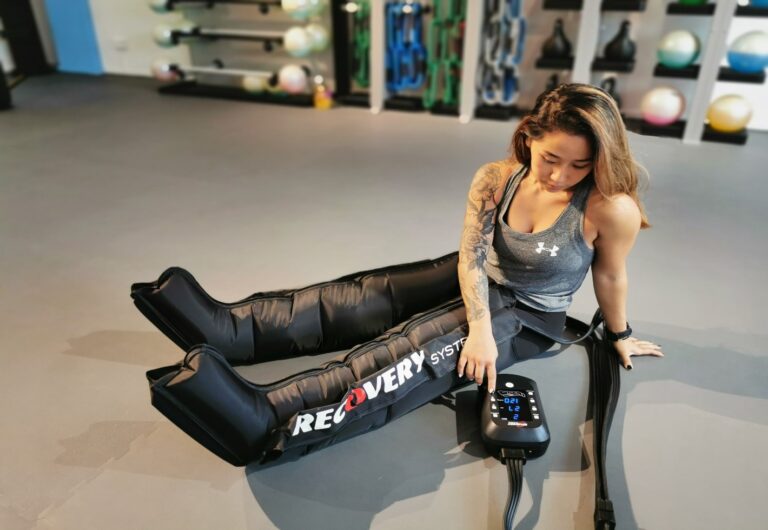
Intermittent pneumatic compression (IPC) devices work by cycling air pressure through multi-chamber wraps, sequentially squeezing from the foot upward toward the trunk. This peristaltic or sequential action directly mimics the natural muscle pump — the mechanism by which calf contractions during walking push venous blood back toward the heart. When you’re at rest after a hard session, that pump isn’t working. IPC does the job for you.
A 2024 systematic review and meta-analysis by Maia and colleagues, published in Biology of Sport, analysed the effects of lower-limb IPC on sports recovery across multiple databases. The findings supported IPC as an effective recovery modality, with significant improvements in perceived muscle soreness and markers of muscle damage in the hours following exercise. ⁸
A 2025 systematic review and meta-analysis published on ScienceDirect that examined IPC alongside other modalities found moderate-certainty evidence that IPC reduces perceived muscle soreness — a stronger evidence rating than many competing methods in the same analysis. ⁹
Critically, IPC addresses a mechanism that neither ice baths nor massage guns primarily target: venous and lymphatic drainage. After hard training, particularly in the lower limbs, fluid pools in the interstitial tissue. This contributes to that familiar heavy, stiff feeling in the legs the day after a long run or heavy squat session. IPC directly moves that fluid. A study in PM&R (2025) examining IPC specifically for DOMS found significant reductions in muscular swelling alongside soreness outcomes, noting the mechanism of improved lymphatic clearance as a key driver. ¹⁰
For post-surgical recovery and clinical lymphoedema management, IPC has an even longer evidence base — it is an established medical treatment, not merely a wellness trend. This clinical heritage means the underlying physiology is well understood in a way that some newer recovery tools are not.
What Sets IPC Apart from the Other Two
The most important distinction is that IPC improves venous return and lymphatic drainage across the entire treated limb, not just locally. A massage gun can address a knot in your quad; a compression boot can clear the entire leg simultaneously.
There is also no evidence that IPC has the hypertrophy-blunting effect documented with cold water immersion. Unlike CWI, IPC does not interfere with the inflammatory cascade in a way that suppresses muscle protein synthesis. You can use compression boots after a strength session without worrying that you’re erasing your gains.
The main practical barrier has historically been cost and portability. Professional-grade IPC systems were for years confined to physiotherapy clinics and elite sports teams. That has changed significantly. Portable, battery-powered IPC units now bring the same technology into home and travel use.
Best for: Lower limb recovery after endurance training, post-race recovery, multi-day training blocks, travel, post-surgical rehabilitation, lymphatic oedema management, frequent flyers, aged care.
Limitations: Less targeted than a massage gun for isolated upper-body muscle groups. Higher upfront cost than the other two options. Less acute pain relief than CWI in a same-day tournament context.
Who Should Use What — A Practical Guide
If you’re a strength or power athlete training for size and performance over a 12+ week programme, ice baths are your lowest priority and potentially counterproductive. Massage guns for targeted soreness, compression boots for systemic leg recovery between sessions.
If you’re an endurance runner or cyclist logging high weekly volume, compression boots are your primary tool. IPC addresses the cumulative venous load in the legs that builds over heavy weeks in a way neither alternative can match. Add a massage gun for pre-run activation and isolated tightness.
If you’re competing in a multi-day tournament with matches 12–24 hours apart, this is where cold-water immersion earns its place. The acute pain-dulling and short-term soreness reduction is real and relevant here. Use it strategically, not habitually.
If you’re a frequent flyer or traveller: compression is the answer, full stop. Ice baths are not available at altitude, and massage guns don’t address the venous stasis that causes in-flight leg swelling and post-travel heaviness.
If you’re recovering from surgery or managing oedema: IPC has clinical-grade evidence in exactly this application. It is the tool of choice, and in many cases, the tool recommended by physiotherapists and orthopaedic surgeons.
If you have a limited budget and need one tool, a portable compression device offers the highest return on investment for the widest range of athletes and active people. It addresses the recovery bottleneck that most people are least effectively managing — systemic lower-limb venous return.
The Honest Bottom Line
These three tools are not competitors. They’re addressing different problems at different timescales. The mistake most people make — and the one that drives most of the overwrought internet debate on this topic — is treating them as interchangeable alternatives when they’re not.
The evidence suggests a hierarchy of specificity. For acute same-day pain management in competition, cold has a role. For targeted muscle soreness and mobility, percussive therapy has a role. For systemic circulation, fluid drainage, and the kind of consistent weekly recovery that compounds into better training adaptation over time, intermittent pneumatic compression has the strongest and broadest evidence base, the fewest contraindications, and the most direct mechanistic link to what the lower limbs need after hard work.
The athletes who recover best aren’t the ones who use the tool that hurts the most or costs the most. They’re the ones who understand what their bodies need and apply the right interventions at the right time.
References
Armstrong RB. Mechanisms of exercise-induced delayed onset muscular soreness: a brief review. Med Sci Sports Exerc. 1984;16(6):529–538.
Hohenauer E, Taeymans J, Baeyens JP, Clarys P, Clijsen R. The effect of post-exercise cryotherapy on recovery characteristics: a systematic review and meta-analysis. PLOS ONE. 2015;10(9):e0139028.
Roberts LA, Raastad T, Markworth JF, et al. Post-exercise cold water immersion attenuates acute anabolic signalling and long-term adaptations in muscle to strength training. J Physiol. 2015;593(18):4285–4301.
Bleakley C, McDonough S, MacAuley D. The use of ice in the treatment of acute soft-tissue injury: a systematic review of randomized controlled trials. Br J Sports Med. 2004;38(4):389–394. (Cited in: Glasgow PD et al., 2012, BJSM commentary on icing protocols.)
Dupuy O, Douzi W, Theurot D, Bosquet L, Dugué B. An evidence-based approach for choosing post-exercise recovery techniques to reduce markers of muscle damage, soreness, fatigue, and inflammation: a systematic review with meta-analysis. Front Physiol. 2018;9:403. (Findings replicated in: Healthcare, 2023.)
Martin J. A critical evaluation of percussion massage gun devices as a rehabilitation tool focusing on lower limb mobility: a literature review. SportRxiv Preprints. January 20, 2021. doi:10.31236/osf.io/j9ya8.
Yu H, Li W, et al. The effect of percussion massage therapy on the recovery of delayed onset muscle soreness in physically active young men — a randomized controlled trial. Front Public Health. 2025;13:1561970.
Maia F, Nakamura FY, Sarmento H, Marcelino R, Ribeiro J. Effects of lower-limb intermittent pneumatic compression on sports recovery: a systematic review and meta-analysis. Biol Sport. 2024;41(4):263–275.
López-Hernández L, et al. Effects of photobiomodulation, intermittent pneumatic compression and neuromuscular electrical stimulation on muscle recovery: systematic review with meta-analysis. J Sci Med Sport. 2025. doi:10.1016/j.jsams.2025.xx.xxx.
Gu Y, et al. Effects of intermittent pneumatic compression on delayed onset muscle soreness and recovery from muscular fatigue. PM&R. 2025. doi:10.1002/pmrj.13377.
Michael Lyons is a biohacking and recovery specialist with three decades of technology and Meditech experience and over 10,000 hours in endurance sports coaching. Recovery Systems Sport supplies clinic-grade IPC compression devices, portable calf pumps, and PEMF recovery mats to athletes, physiotherapy clinics, and aged care facilities globally.
Explore our compression boot range →
Written by: Michael Lyons
Michael Lyons is a recovery specialist with three decades of tech and Meditech experience and 15,000+ hours in endurance sports coaching. The author is not a licensed physician or medical professional. The health information in this article represents the author’s research and personal perspective, not professional medical advice.
Medically Reviewed by: Ayman Shafique, PharmD
Ayman Shafique is a licensed pharmacist with expertise in pharmacology and medical writing. Her work focuses on reviewing and developing evidence-based health and wellness content, ensuring scientific accuracy, clarity, and alignment with current pharmaceutical research. She specialises in translating complex pharmacological and medical information into accessible, reliable content for public and professional audiences.
MEDICAL DISCLAIMER
This article is for informational and educational purposes only and should not be considered medical advice. The author is a recovery specialist, not a licensed medical doctor or healthcare provider. Health-related claims discussed in this article are based on emerging research and should not replace professional medical consultation. Many claims remain theoretical and require further scientific validation. Individual results may vary, and these concepts are not widely accepted as standard medical practice. Before using any PEMF therapy device or making health decisions based on this article, please consult a qualified healthcare professional — especially if you have pre-existing medical conditions, are pregnant, have implanted medical devices such as pacemakers, or are taking medications.
Commercial Disclosure
This website sells PEMF therapy products, including BioMat technology. The author and company have a commercial interest in promoting these products.
If you are experiencing a mental health crisis or suicidal thoughts, contact your local emergency number immediately. In the United States, call or text 988. Internationally, see the International Association for Suicide Prevention directory.
So, which one is worth your time — and your money?
The honest answer is that it depends on what you’re trying to fix and when. But the longer answer, which is the one that will help you, involves understanding what each tool is doing inside your body, where the research genuinely supports it, and where the marketing has quietly run ahead of the evidence.
I’ve spent 30 years in health technology and endurance sports coaching. I’ve watched these tools evolve from clinical-only devices to household items. What follows is the most straightforward comparison I can give you — with the science to back it up.
First, What Are We Actually Trying to Recover From?
Before comparing tools, it’s worth being precise about the problem we’re solving. Hard exercise causes several distinct types of damage and disruption:
Mechanical muscle damage — micro-tears in muscle fibres from eccentric contractions (the lowering phase of a squat, the landing phase of running). This is the main driver of delayed-onset muscle soreness (DOMS), which typically peaks 24–72 hours after exercise. ¹
Metabolic waste accumulation — lactate, hydrogen ions, and other byproducts that build up during intense effort and need to be cleared from the tissue.
Inflammation and fluid accumulation — the body’s natural repair response, which brings immune cells to the site but also causes swelling and reduces range of motion.
Nervous system fatigue — accumulated neural stress that dulls reaction time, motor unit recruitment, and perceived effort.
No single recovery tool addresses all four. That’s the most important thing to understand before reading any comparison. The tool that best clears metabolic waste is not necessarily the same one that best handles DOMS. The method that works brilliantly after a marathon is not the right choice after a heavy leg session in the gym — and the science here is unambiguous on that last point.
Ice Baths (Cold Water Immersion)
What the Research Actually Says
Cold water immersion (CWI) has been part of athlete recovery culture for decades. The basic mechanism is vasoconstriction — the blood vessels constrict under cold, then dilate after rewarming, which is thought to flush waste products from the tissue. Cold also reduces nerve conduction velocity, which is why ice reliably reduces perceived pain.
For acute pain management and same-day performance turnaround — say, a tournament player with back-to-back matches within 24 hours — CWI has solid evidence behind it. Multiple studies show reduced muscle soreness ratings and faster recovery of muscular performance in the short term when athletes use cold water immersion between events. ²
The problem arises when athletes use ice baths regularly in a strength or hypertrophy training programme. In a landmark 2015 study published in the Journal of Physiology, Roberts and colleagues found that post-exercise cold water immersion attenuated the anabolic signalling pathways responsible for muscle growth. After 12 weeks of strength training, the cold-water immersion group showed only approximately a 2% increase in quadriceps muscle mass compared to around 15% in the control group.³ The mTORC1 signalling pathway — essential for protein synthesis and muscle hypertrophy — was significantly blunted by repeated CWI application.
To put it plainly: if you are training to get stronger, regular ice baths may be quietly undermining your results.
A 2012 meta-analysis in the British Journal of Sports Medicine added further nuance, noting that “ice is commonly used after acute muscle strains, but there are no clinical studies of its effectiveness” in that specific context. ⁴ For endurance athletes competing frequently and not primarily seeking hypertrophy, CWI remains a useful acute tool. For anyone training to build muscle or strength over time, the evidence now counsels caution.
The Practical Limitations
Beyond the science, ice baths carry practical barriers that limit consistent use: preparation time, temperature tolerance, access to equipment, and safety considerations for people with cardiovascular conditions, hypertension, or poor peripheral circulation. Hypothermia is a genuine risk when protocols aren’t followed carefully, and cold shock response can be dangerous for certain populations.
Best for: Multi-day tournament athletes, endurance competitors with rapid turnaround between events, acute inflammation management.
Use with caution if you’re in a strength or hypertrophy training block, have cardiovascular conditions, or need consistent daily use over the course of weeks.
Massage Guns (Percussive Therapy)
What the Research Actually Says
The massage gun category has grown enormously, and researchers have been working hard to keep pace. Percussive therapy devices deliver rapid, concentrated pulses of pressure into muscle tissue — typically up to 40 percussions per second — which stimulate mechanoreceptors and proprioceptors and appear to reduce the subjective experience of soreness.
A 2023 study published in Healthcare found that massage guns can reduce DOMS when applied either immediately after exercise or at 24–72 hours post-exercise.⁵ A systematic review by Martin (2021) analysing 39 studies concluded that percussive massage guns effectively increase flexibility and reduce DOMS, but do not significantly impact muscle activation or force production.⁶
The most important caveat from the literature is specificity: massage guns work on the area you apply them to. They’re excellent for targeted interventions — a tight calf, a knotted hamstring, a stiff upper trap — but they don’t address whole-system circulation or fluid dynamics in the way that IPC or CWI does. A 2023 study published in Frontiers in Public Health conducted a randomised controlled trial on percussive massage therapy for DOMS recovery and found meaningful improvements in pain scores and range of motion but noted that outcomes varied significantly by session duration and timing. ⁷
What the evidence consistently supports is that massage guns are most effective for:
Improving range of motion before training (pre-activation)
Reducing localised muscle soreness in the 24–48-hour post-exercise window
Releasing myofascial tension in specific muscle groups
What they’re less suited for is addressing the systemic fluid accumulation and circulatory load that build up over full training weeks, particularly in the legs. For a runner logging 80+ km per week, using a massage gun on the calves addresses the symptom rather than the underlying venous drainage issue.
The Practical Strengths
Massage guns win on convenience and versatility. They’re portable, quick to use, require no setup, and can be self-administered during warm-up, between sets, or on the couch during a TV show. For many athletes, they slot into daily use more realistically than the alternatives.
Best for: Pre-training activation, targeted muscle release, localised DOMS management, travel recovery, upper-body recovery where compression boots don’t reach.
Less suited for: Systemic fluid clearance, full-leg venous return, post-surgical or clinical recovery, conditions involving oedema or lymphatic dysfunction.
Compression Boots (Intermittent Pneumatic Compression)
What the Research Actually Says
Intermittent pneumatic compression (IPC) devices work by cycling air pressure through multi-chamber wraps, sequentially squeezing from the foot upward toward the trunk. This peristaltic or sequential action directly mimics the natural muscle pump — the mechanism by which calf contractions during walking push venous blood back toward the heart. When you’re at rest after a hard session, that pump isn’t working. IPC does the job for you.
A 2024 systematic review and meta-analysis by Maia and colleagues, published in Biology of Sport, analysed the effects of lower-limb IPC on sports recovery across multiple databases. The findings supported IPC as an effective recovery modality, with significant improvements in perceived muscle soreness and markers of muscle damage in the hours following exercise. ⁸
A 2025 systematic review and meta-analysis published on ScienceDirect that examined IPC alongside other modalities found moderate-certainty evidence that IPC reduces perceived muscle soreness — a stronger evidence rating than many competing methods in the same analysis. ⁹
Critically, IPC addresses a mechanism that neither ice baths nor massage guns primarily target: venous and lymphatic drainage. After hard training, particularly in the lower limbs, fluid pools in the interstitial tissue. This contributes to that familiar heavy, stiff feeling in the legs the day after a long run or heavy squat session. IPC directly moves that fluid. A study in PM&R (2025) examining IPC specifically for DOMS found significant reductions in muscular swelling alongside soreness outcomes, noting the mechanism of improved lymphatic clearance as a key driver. ¹⁰
For post-surgical recovery and clinical lymphoedema management, IPC has an even longer evidence base — it is an established medical treatment, not merely a wellness trend. This clinical heritage means the underlying physiology is well understood in a way that some newer recovery tools are not.
What Sets IPC Apart from the Other Two
The most important distinction is that IPC improves venous return and lymphatic drainage across the entire treated limb, not just locally. A massage gun can address a knot in your quad; a compression boot can clear the entire leg simultaneously.
There is also no evidence that IPC has the hypertrophy-blunting effect documented with cold water immersion. Unlike CWI, IPC does not interfere with the inflammatory cascade in a way that suppresses muscle protein synthesis. You can use compression boots after a strength session without worrying that you’re erasing your gains.
The main practical barrier has historically been cost and portability. Professional-grade IPC systems were for years confined to physiotherapy clinics and elite sports teams. That has changed significantly. Portable, battery-powered IPC units now bring the same technology into home and travel use.
Best for: Lower limb recovery after endurance training, post-race recovery, multi-day training blocks, travel, post-surgical rehabilitation, lymphatic oedema management, frequent flyers, aged care.
Limitations: Less targeted than a massage gun for isolated upper-body muscle groups. Higher upfront cost than the other two options. Less acute pain relief than CWI in a same-day tournament context.
Who Should Use What — A Practical Guide
If you’re a strength or power athlete training for size and performance over a 12+ week programme, ice baths are your lowest priority and potentially counterproductive. Massage guns for targeted soreness, compression boots for systemic leg recovery between sessions.
If you’re an endurance runner or cyclist logging high weekly volume, compression boots are your primary tool. IPC addresses the cumulative venous load in the legs that builds over heavy weeks in a way neither alternative can match. Add a massage gun for pre-run activation and isolated tightness.
If you’re competing in a multi-day tournament with matches 12–24 hours apart, this is where cold-water immersion earns its place. The acute pain-dulling and short-term soreness reduction is real and relevant here. Use it strategically, not habitually.
If you’re a frequent flyer or traveller: compression is the answer, full stop. Ice baths are not available at altitude, and massage guns don’t address the venous stasis that causes in-flight leg swelling and post-travel heaviness.
If you’re recovering from surgery or managing oedema: IPC has clinical-grade evidence in exactly this application. It is the tool of choice, and in many cases, the tool recommended by physiotherapists and orthopaedic surgeons.
If you have a limited budget and need one tool, a portable compression device offers the highest return on investment for the widest range of athletes and active people. It addresses the recovery bottleneck that most people are least effectively managing — systemic lower-limb venous return.
The Honest Bottom Line
These three tools are not competitors. They’re addressing different problems at different timescales. The mistake most people make — and the one that drives most of the overwrought internet debate on this topic — is treating them as interchangeable alternatives when they’re not.
The evidence suggests a hierarchy of specificity. For acute same-day pain management in competition, cold has a role. For targeted muscle soreness and mobility, percussive therapy has a role. For systemic circulation, fluid drainage, and the kind of consistent weekly recovery that compounds into better training adaptation over time, intermittent pneumatic compression has the strongest and broadest evidence base, the fewest contraindications, and the most direct mechanistic link to what the lower limbs need after hard work.
The athletes who recover best aren’t the ones who use the tool that hurts the most or costs the most. They’re the ones who understand what their bodies need and apply the right interventions at the right time.
References
Armstrong RB. Mechanisms of exercise-induced delayed onset muscular soreness: a brief review. Med Sci Sports Exerc. 1984;16(6):529–538.
Hohenauer E, Taeymans J, Baeyens JP, Clarys P, Clijsen R. The effect of post-exercise cryotherapy on recovery characteristics: a systematic review and meta-analysis. PLOS ONE. 2015;10(9):e0139028.
Roberts LA, Raastad T, Markworth JF, et al. Post-exercise cold water immersion attenuates acute anabolic signalling and long-term adaptations in muscle to strength training. J Physiol. 2015;593(18):4285–4301.
Bleakley C, McDonough S, MacAuley D. The use of ice in the treatment of acute soft-tissue injury: a systematic review of randomized controlled trials. Br J Sports Med. 2004;38(4):389–394. (Cited in: Glasgow PD et al., 2012, BJSM commentary on icing protocols.)
Dupuy O, Douzi W, Theurot D, Bosquet L, Dugué B. An evidence-based approach for choosing post-exercise recovery techniques to reduce markers of muscle damage, soreness, fatigue, and inflammation: a systematic review with meta-analysis. Front Physiol. 2018;9:403. (Findings replicated in: Healthcare, 2023.)
Martin J. A critical evaluation of percussion massage gun devices as a rehabilitation tool focusing on lower limb mobility: a literature review. SportRxiv Preprints. January 20, 2021. doi:10.31236/osf.io/j9ya8.
Yu H, Li W, et al. The effect of percussion massage therapy on the recovery of delayed onset muscle soreness in physically active young men — a randomized controlled trial. Front Public Health. 2025;13:1561970.
Maia F, Nakamura FY, Sarmento H, Marcelino R, Ribeiro J. Effects of lower-limb intermittent pneumatic compression on sports recovery: a systematic review and meta-analysis. Biol Sport. 2024;41(4):263–275.
López-Hernández L, et al. Effects of photobiomodulation, intermittent pneumatic compression and neuromuscular electrical stimulation on muscle recovery: systematic review with meta-analysis. J Sci Med Sport. 2025. doi:10.1016/j.jsams.2025.xx.xxx.
Gu Y, et al. Effects of intermittent pneumatic compression on delayed onset muscle soreness and recovery from muscular fatigue. PM&R. 2025. doi:10.1002/pmrj.13377.
Michael Lyons is a biohacking and recovery specialist with three decades of technology and Meditech experience and over 10,000 hours in endurance sports coaching. Recovery Systems Sport supplies clinic-grade IPC compression devices, portable calf pumps, and PEMF recovery mats to athletes, physiotherapy clinics, and aged care facilities globally.
Explore our compression boot range →
Written by: Michael Lyons
Michael Lyons is a recovery specialist with three decades of tech and Meditech experience and 15,000+ hours in endurance sports coaching. The author is not a licensed physician or medical professional. The health information in this article represents the author’s research and personal perspective, not professional medical advice.
Medically Reviewed by: Ayman Shafique, PharmD
Ayman Shafique is a licensed pharmacist with expertise in pharmacology and medical writing. Her work focuses on reviewing and developing evidence-based health and wellness content, ensuring scientific accuracy, clarity, and alignment with current pharmaceutical research. She specialises in translating complex pharmacological and medical information into accessible, reliable content for public and professional audiences.
MEDICAL DISCLAIMER
This article is for informational and educational purposes only and should not be considered medical advice. The author is a recovery specialist, not a licensed medical doctor or healthcare provider. Health-related claims discussed in this article are based on emerging research and should not replace professional medical consultation. Many claims remain theoretical and require further scientific validation. Individual results may vary, and these concepts are not widely accepted as standard medical practice. Before using any PEMF therapy device or making health decisions based on this article, please consult a qualified healthcare professional — especially if you have pre-existing medical conditions, are pregnant, have implanted medical devices such as pacemakers, or are taking medications.
Commercial Disclosure
This website sells PEMF therapy products, including BioMat technology. The author and company have a commercial interest in promoting these products.
If you are experiencing a mental health crisis or suicidal thoughts, contact your local emergency number immediately. In the United States, call or text 988. Internationally, see the International Association for Suicide Prevention directory.
| Ice Bath | Massage Gun | Compression Boots (IPC) | |
| Primary mechanism | Vasoconstriction, pain nerve suppression | Percussive tissue stimulation | Sequential venous/lymphatic drainage |
| DOMS reduction | ✓ Good short-term | ✓ Good localised | ✓ Good systemic |
| Fluid/swelling clearance | Moderate | Limited | Excellent |
| Hypertrophy-safe | ⚠️ Use with caution post-strength | ✓ Yes | ✓ Yes |
| Circulatory benefit | Indirect (rewarming) | Minimal | Direct and primary |
| Clinical evidence level | Strong for acute/endurance | Moderate, growing | Strong, clinical standard |
| Convenience | Low (prep required) | Very high | Moderate-high |
| Daily use feasibility | Low-moderate | High | High |
| Cost over time | Low (ice) to high (tub) | Mid (one-time) | Mid-high (one-time) |
| Safe for all populations | No | Generally, yes | Generally, yes (contraindications apply) |
Originally Published::
Author:
Michael Lyons is a biohacking and recovery specialist with three decades of tech and Meditech experience and 15,000+ hours in endurance sports coaching.