
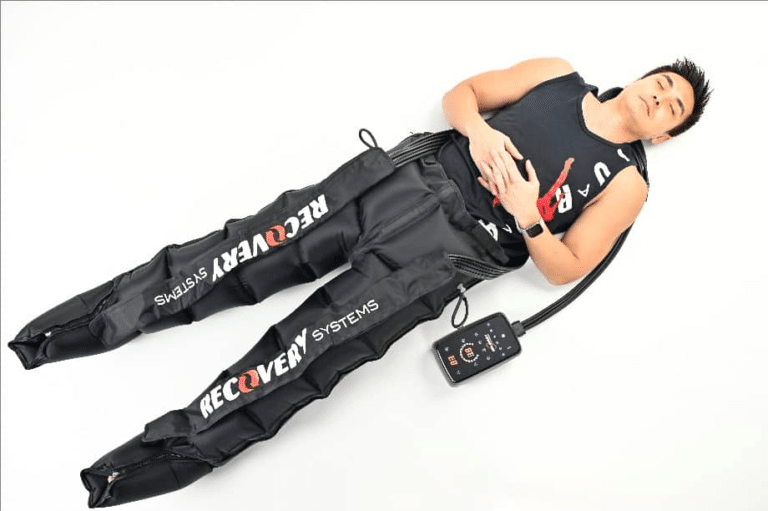
What Happens to Your Muscles When You Use Compression Therapy
Published:
Updated:
Athletes, fitness enthusiasts, and individuals with circulation issues have long sought effective ways to enhance recovery and reduce muscle fatigue. Compression therapy has gained traction as a science-backed solution, offering targeted pressure to improve circulation, reduce swelling, and accelerate muscle repair. Research confirms that air compression therapy enhances venous return, mitigates muscle damage, and supports lymphatic drainage, making it a valuable tool for optimizing performance and recovery.
Does Air Compression Therapy Actually Work?
Yes, air compression therapy is effective in promoting circulation, reducing swelling, and improving recovery. It works by applying controlled pressure to specific areas of the body, typically the legs and muscles, to stimulate blood flow. This process helps deliver oxygen and nutrients more efficiently, which speeds up muscle repair and reduces soreness.
Here’s a breakdown of how air compression therapy works:
- Air compression therapy enhances circulation and accelerates muscle recovery by applying external pressure to the limbs, stimulating blood flow and reducing swelling. This process is driven by mechanical and physiological responses. When compression is applied, venous return improves as veins are compressed, increasing pressure and promoting the flow of deoxygenated blood back to the heart, reducing blood pooling and edema. The improved circulation enhances oxygen and nutrient delivery to muscle tissues, aiding healing and minimizing soreness.
- Air compression therapy reduces exercise-induced muscle damage (EIMD) by decreasing inflammatory responses and oxidative stress. Studies show that compression therapy mitigates the release of creatine kinase (CK), a marker of muscle damage, thereby attenuating secondary muscle damage and expediting recovery. By reducing metabolic waste accumulation, such as lactate, compression therapy improves muscle function and delays the onset of muscle fatigue.
- Compression also positively influences lymphatic drainage, which helps remove excess fluid and cellular debris that accumulate post-exercise, preventing excessive muscle edema.
- Localized compression therapy influences proprioceptive(body-awareness) feedback by stabilizing muscle groups and reducing excessive movement oscillations, thereby decreasing injury risk and enhancing neuromuscular function. The therapy also stimulates touch-sensors in the skin, improving muscle coordination and reducing the perception of pain.
- Research suggests that air compression therapy modulates endothelial function, improving vascular reactivity and reducing the risk of deep vein thrombosis by promoting continuous blood circulation.
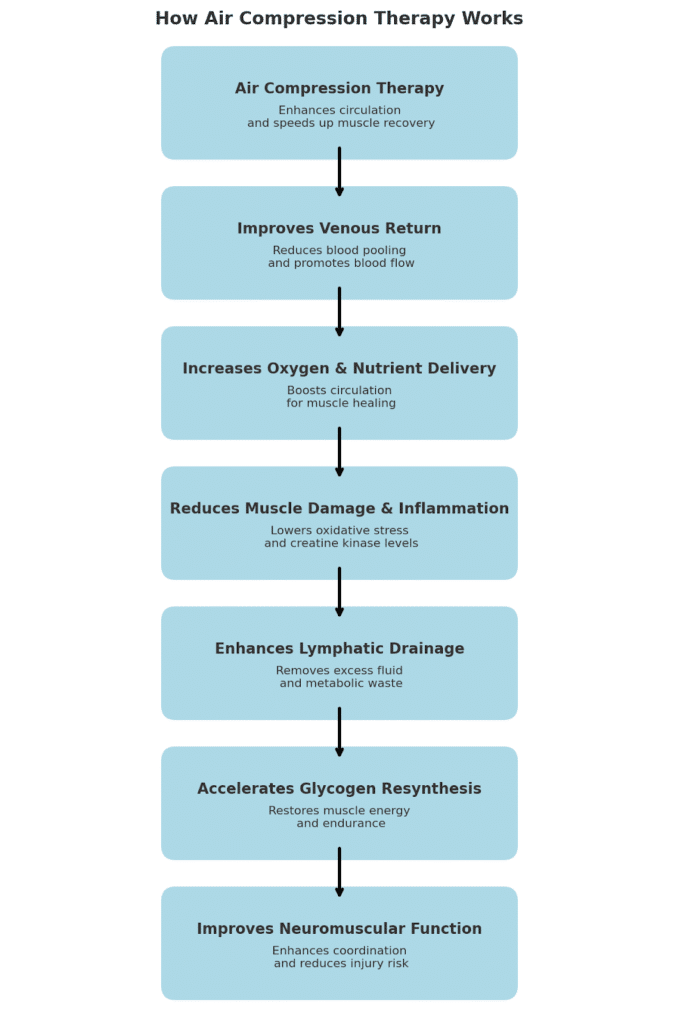
Flowchart illustrating how air compression therapy works.
What Are the Compression Boots Benefits?
Compression boots benefits are a lot. Some of the key benefits include:
1. Better Circulation
Compression boots help improve blood flow by gently squeezing the veins, making it easier for the heart to pump oxygen-rich blood through the body. A study in the Philippine Journal of Surgical Specialties looked at how these boots affect circulation. Researchers tested people using a special type of compression that inflates and deflates in rhythm with walking. The results showed that blood flow improved, helping to prevent blood from pooling in the veins and keeping circulation strong.
2. Pain and Discomfort Relief
Compression boots help reduce stiffness and pain caused by muscle overuse, poor circulation, or conditions like varicose veins. A study published in the American Journal of Translational Research examined whether vascular boot warming could improve recovery in patients with deep vein thrombosis in the lower extremities. Researchers divided 104 patients into two groups: one received standard anticoagulant therapy, while the other received the same treatment along with vascular boot warming three times daily for 45 minutes over 14 days.
The results showed that the group using vascular boot warming experienced greater pain relief, reduced swelling, lower rates of pulmonary embolism and extended deep vein thrombosis, and overall better clinical outcomes. No major bleeding events were reported, indicating that vascular boot warming is a safe and effective addition to standard care for deep vein thrombosis patients.
3. Swelling Reduction and Edema Control
A study in Dermatologic Surgery explored the effectiveness of lightweight gradient compression therapy in relieving venous symptoms among flight attendants. Researchers conducted a prospective crossover trial with 19 participants who first went without compression for two weeks, then used compression therapy (8–15 mmHg and 15–20 mmHg) while flying over four weeks.
The findings showed that compression therapy reduced discomfort, swelling, fatigue, aching, and leg tightness compared to no compression.
4. Deep Vein Thrombosis Prevention
Compression boots help reduce the risk of blood clot formation, particularly for individuals who are immobile for long periods. A study in Archives of Surgery assessed whether combining graduated compression stockings with intermittent pneumatic compression boots could further improve blood flow in the legs. Researchers conducted duplex imaging to measure peak venous velocity in the superficial femoral vein among both healthy participants and postoperative patients.
The findings revealed that pneumatic compression boots increased venous velocity, while compression stockings alone had no noticeable impact. Usage of both methods together did not enhance blood flow beyond what was achieved with pneumatic compression boots alone. These results suggest that while pneumatic compression is effective in promoting circulation, adding compression stockings does not provide additional advantages .
5. Post-Thrombotic Syndrome Prevention
For individuals recovering from DVT, compression boots help reduce long-term complications such as swelling and pain. A review in Deutsches Ärzteblatt International analyzed the role of compression therapy in treating acute deep vein thrombosis (DVT) and preventing post-thrombotic syndrome (PTS). Researchers examined 12 randomized controlled trials and a meta-analysis, covering 3,751 patients. The findings showed that adding compression therapy to drug treatment during the first nine days of acute DVT led to faster pain relief and reduced swelling. For PTS prevention, medical compression stockings reduced its frequency and severity by 16% to 27%, with a meta-analysis confirming their effectiveness. The review concluded that compression therapy is a beneficial standard treatment for DVT and helps lower the risk of long-term complications
How Long Should You Use Air Compression Boots?
The ideal duration for using compression boots varies based on the intended purpose. For athletic recovery, 15-30 minutes per session post-workout is recommended to reduce muscle fatigue and improve recovery time. For medical use, individuals with conditions like poor circulation, DVT prevention, or lymphedema should follow their doctor’s recommendations, typically 20-40 minutes per session. For general wellness, if using for relaxation and improved circulation, 20-40 minutes per session, 3-4 times per week, is effective. For intense soreness or swelling, sessions can last up to 45 minutes, but should not exceed 60 minutes to avoid excessive pressure on the veins.
Note: Using compression boots too frequently or for extended periods may cause discomfort or excessive compression, so it’s best to start with shorter sessions and adjust based on comfort and results.
What Are Compression Boots Good For?
- Athletes & fitness enthusiasts
- People with poor circulation
- Post-surgery recovery
- Edema & lymphedema management
- Travelers & sedentary individuals
Who Should Not Use Air Compression Boots?
Although air compression therapy is generally safe, some individuals should avoid using compression boots or consult a doctor before use:
- People with severe cardiovascular diseases, consult a doctor before use.
- Individuals with DVT or blood clotting disorders, risk of dislodging clots.
- People with open wounds or skin infections may worsen conditions.
- Pregnant women, higher pressure needs doctor approval.
- Patients with neuropathy, consult a healthcare professional.
If any pain, numbness, or unusual swelling occurs during or after using compression boots, discontinue use immediately and seek medical advice.
What Are the Side Effects of Intermittent Pneumatic Compression Boots?
While air compression boots are safe for most users, there are potential side effects, including:
- Skin irritation, some individuals may experience redness, rashes, or discomfort due to prolonged use.
- Excessive pressure, using a high-pressure setting for too long can lead to temporary numbness or tingling sensations.
- Blood pressure changes, compression therapy affects circulation, which may temporarily alter blood pressure levels in sensitive individuals.
- Muscle soreness, while compression helps reduce soreness, excessive use may cause mild stiffness in some users.
- Tingling or numbness, if the pressure setting is too high or if the boots are worn for too long, some users might feel temporary numbness in the legs.
To minimize risks, always follow usage guidelines and adjust compression intensity based on comfort levels. If discomfort persists or worsens, consult a doctor.
How to Choose the Right Air Compression Recovery System
Always choose the right brand like Recovery Systems, when selecting an air compression recovery system. Follow these key steps to find the best option:
1. Choose adjustable pressure levels, ensure the boots allow customization of compression intensity based on your recovery needs.
2. Check for multiple compression modes, look for models with different settings to target specific muscle groups effectively.
3. Prioritize ease of use, select boots with simple controls and an intuitive interface for hassle-free operation.
4. Consider portability, lightweight, rechargeable models are ideal for both home use and travel.
5. Assess durability and warranty, invest in high-quality boots backed by a solid warranty for long-term use.
6. Look for additional features, options like built-in timers, zone control, and app integration can enhance your experience.
7. Compare top brands and customer reviews, researching user feedback helps ensure reliability and effectiveness.
Why Choose Recovery Systems?
- Customizable pressure levels, allowing a tailored recovery experience.
- Multiple compression modes, designed to target different muscle groups.
- Lightweight and portable, making them ideal for travel and home use.
- High-quality materials and durability, backed by a solid warranty.
- User-friendly design, with intuitive controls for effortless operation.
- Advanced recovery technology, promoting faster muscle recovery and improved circulation.
Can You Use Compression Boots Every Day?
Yes, compression boots can be used daily, but the duration and intensity should be adjusted based on individual needs. Regular use can help with muscle recovery, circulation, and swelling reduction. However, it’s important to listen to your body and avoid excessive pressure or prolonged sessions that may cause discomfort.
Are Compression Boots Dangerous?
Compression boots are generally safe but can pose risks in certain situations. People with a history of deep vein thrombosis (DVT) should use them only under medical supervision. Overuse or high pressure can cause numbness, tingling, or circulation issues. Those with underlying health conditions like peripheral artery disease or severe hypertension should consult a doctor before use. Ill-fitting boots or prolonged sessions may also lead to skin irritation or bruising.
Conclusion
Air compression therapy is a highly effective method for enhancing circulation, reducing swelling, and accelerating muscle recovery. Whether used for sports recovery, medical conditions, or general wellness, it offers proven benefits. However, individuals with certain health conditions should consult a doctor before use. Choosing the right compression boots and following best practices will ensure maximum comfort and effectiveness.

Author:
Michael Lyons is a biohacking and recovery specialist with three decades of tech and Meditech experience and 10,000+ hours in endurance sports coaching.