
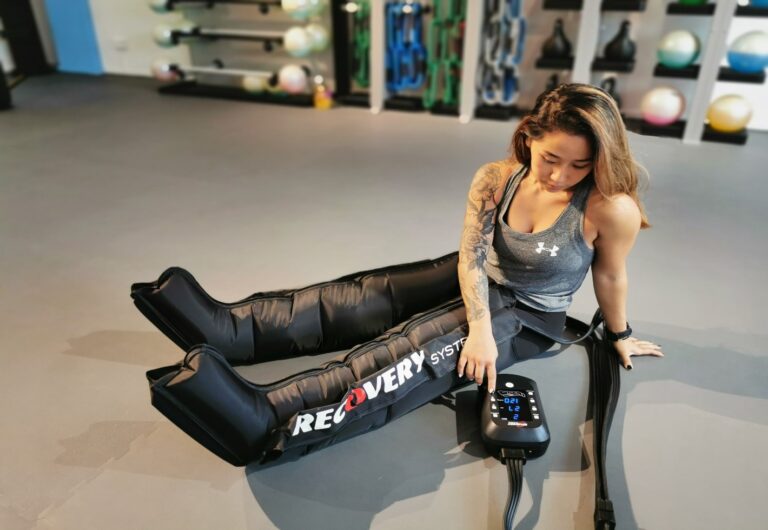
Compression Recovery Boots: Answers to the Questions Everyone Is Asking
Last Updated::
If you’ve spent any time in a running forum, a CrossFit or Hyrox Facebook group, or the comments section of a recovery-tech ad, you’ve seen the debate. Some people swear compression boots saved their training block. Others think they’re an expensive way to feel like you’re doing something for recovery. Both camps have a point, and the truth sits somewhere in the middle, backed by a small but growing body of research.
Below are honest answers to the questions people actually ask before they buy a pair, drawn from real user discussions on Reddit and the current clinical research on intermittent pneumatic compression.
Do compression boots actually work?
Yes, with a caveat. The most rigorous evidence we could find is a 2024 systematic review and meta-analysis published via PubMed, which pooled data across roughly 17 studies on lower-limb intermittent pneumatic compression after exercise. It found a trivial-to-small benefit for muscle function recovery, and a trivial-to-moderate benefit for reducing pain and perceived soreness (PubMed, 2024).
The honest summary: compression boots are more likely to help you feel recovered than to change objective markers like blood lactate or muscle damage dramatically. Several of the studies reviewed didn’t include a placebo or sham-compression control group, so it’s hard to separate the physical effect from the psychological one fully. That doesn’t mean the benefit isn’t real. Feeling less sore and more ready to train again has value on its own, especially during a hard training block. But if a product claims boots will “flush lactic acid” or dramatically speed muscle repair, treat that as marketing, not established science. I’d recommend reading the original review yourself if you want the full picture rather than relying on secondhand summaries, including this one.
How long should you use compression boots each day?
Most manufacturer guidance and the studies referenced above use sessions in the 15 to 30 minute range, at pressures roughly between 60 and 90 mmHg. There isn’t strong evidence that longer sessions produce proportionally better results, and running a session longer than recommended by your specific device’s manual is not something we’d advise without checking the manufacturer’s guidance first.
How often can you use compression boots safely, and can you overdo it?
For healthy adults without contraindications (more on those below), once or twice daily is generally considered reasonable, and this is consistent with typical study protocols. That said, “safely” depends heavily on individual health history. Overuse isn’t well studied as its own category, so if you’re using boots multiple times a day for weeks on end, that’s a conversation worth having with a physician or physical therapist rather than a blog post.
Who should not use compression boots?
This is the single most important question on this list, and it’s worth taking seriously.
Compression therapy is contraindicated, meaning you should not use it, if you have an active or suspected deep vein thrombosis (DVT). Compressing the limb can dislodge a clot, which can travel to the lungs and cause a pulmonary embolism, a medical emergency. Additional conditions where compression boots are typically not recommended without medical clearance include:
Severe peripheral artery disease, congestive heart failure, active skin infections or open wounds on the legs, and significant peripheral neuropathy (nerve damage that affects your ability to feel pressure or pain).
If you have a history of blood clots, a clotting disorder, recent surgery, or any chronic cardiovascular or circulatory condition, talk to your doctor before starting compression therapy. This is not a box-ticking disclaimer; it’s a real safety issue, and no blog post is a substitute for a conversation with your physician about your specific health history.
Can compression boots help with swelling and leg pain?
For general post-exercise swelling and the heavy, achy feeling after a long day on your feet, many users report meaningful relief, and this lines up with how intermittent pneumatic compression is understood to work: it mimics the natural muscle pump that helps move fluid back toward the heart. For medical swelling conditions such as lymphedema or lipedema, pneumatic compression devices are an established part of clinical treatment. Still, the protocols, pressure settings, and garment types used clinically are often different from those used in consumer recovery boots. If swelling is related to a diagnosed medical condition, work with your treating physician or a certified lymphedema therapist rather than assuming a consumer recovery product is an equivalent substitute.
Will insurance cover compression boots?
Generally, no, not for athletic recovery use. Coverage is a different story for medically diagnosed conditions. Medicare has covered pneumatic compression pumps for lymphedema treatment since 1986, but typically only after a documented four-week trial of conservative therapy (compression garments, exercise, limb elevation) that didn’t produce enough improvement. Commercial insurers vary quite a bit. One published analysis found that roughly 82% of insurers reviewed offered coverage for non-programmable pneumatic compression devices, but almost always with preauthorization requirements (CMS coverage database).
If you’re hoping insurance will cover a recovery boot purchase for training or general wellness use, please verify with your specific insurer, but I’d set expectations low. This coverage pathway exists mainly for diagnosed medical conditions like lymphedema or venous ulcers, not general athletic recovery.
How much do compression boots cost?
Pricing varies widely by brand and feature set. Based on current market listings, entry-level consumer models generally start around $200 to $400, mid-range options with app connectivity and more pressure zones run roughly $400 to $800, and premium or clinic-grade systems can exceed $1,000. These figures are approximate and shift as brands release new models, so treat them as a general ballpark rather than a firm quote, and check current pricing directly before budgeting.
Are compression boots worth the investment?
That depends on how you use them and what you’re comparing them to. If you train hard multiple times a week, value the recovery ritual, and can afford a mid-range unit, many people find it a reasonable addition to a broader recovery routine. If you’re hoping a single piece of equipment will replace sleep, nutrition, or a smart training plan, it won’t. The research suggests a real but modest benefit, layered on top of the fundamentals, not a replacement for them.
What’s the difference between compression boots, compression sleeves, and compression socks?
Compression socks and sleeves apply static, constant pressure and are worn passively, during a flight, a workday, or a run. Compression boots use intermittent pneumatic compression: they inflate and deflate in sequence, actively pumping in a wave-like pattern up the limb. Interestingly, at least one line of research found that pneumatic boots weren’t clearly superior to a well-fitted static compression garment for some outcomes, so the “best” option may come down to convenience, comfort, and what you’ll actually use consistently rather than one technology being definitively superior.
Do compression boots help with DOMS (delayed onset muscle soreness)?
This is one area where the evidence is comparatively more encouraging. Multiple studies point to a moderate effect on perceived soreness specifically, even where objective muscle damage markers don’t move as much. If your main goal is feeling less sore the day after a hard session, this is one of the better-supported use cases.
Can compression boots help with post-surgery recovery or swelling after surgery?
Pneumatic compression is used clinically after some surgeries, most notably to help prevent blood clots in patients with reduced mobility, and this is a well-established medical application. However, post-surgical use should always be directed by your surgeon or care team, using devices and protocols they specify. Do not assume a consumer recovery boot purchased for athletic use is appropriate or approved for post-operative use. Ask your surgical team directly.
Can you sleep in compression boots?
No. Consumer compression boots are designed for short, active sessions, not overnight or unsupervised extended wear. Falling asleep in them isn’t a documented safe use case in any manufacturer guidance we’re aware of, so don’t do it. If you want overnight compression support, that’s a different product category (compression garments designed for that purpose) and still worth checking with a doctor first if you have any circulatory concerns.
Do compression boots work better than ice baths for recovery?
They target recovery differently rather than one being a strict upgrade over the other. Ice baths (cold water immersion) have their own separate body of research, generally showing benefit for perceived soreness with more mixed findings on adaptation to training over time. Compression boots show a similar pattern: better support for how you feel than for objective performance markers. Many athletes use both as complementary tools rather than picking one. If you’re choosing based on convenience, boots let you do other things (read, scroll your phone, work) during a session, which is a practical reason people stick with them more consistently than ice baths.
What should you look for when buying compression boots?
A few practical factors matter more than flashy marketing: adjustable pressure range (look for something in the roughly 20 to 150 mmHg adjustable range depending on intended use), multiple compression zones or chambers for more targeted sequencing, battery life if portability matters to you, and simply whether the sizing fits your leg length and calf circumference. Cuff fit affects both comfort and effectiveness more than most people expect.
What results can you realistically expect?
Reduced perceived soreness, a subjective sense of “lighter” or less fatigued legs, and a relaxing recovery ritual that many people stick with because it feels good, not because it will visibly transform your training in a way a stopwatch would catch. Set your expectations around consistent, moderate support rather than a dramatic recovery shortcut, and you’re less likely to be disappointed.
A note on how this article was researched: the questions above were pulled from real discussions on Reddit communities including r/running, r/crossfit, r/Marathon_Training, r/lipedema, and r/AchillesRupture, and the answers were checked against published research and clinical coverage guidance where available. Medical and insurance information changes, so verify anything relevant to your specific health situation with your doctor and your insurance provider directly.
If you’re ready to compare compression boot options for training, travel, or general recovery, you can browse the full lineup at Recovery Systems.
Sources
- Effects of lower-limb intermittent pneumatic compression on sports recovery: A systematic review and meta-analysis, PubMed
- NCD – Pneumatic Compression Devices (280.6), CMS
- Cross-Sectional Analysis of Insurance Coverage for Lymphedema Treatments in the United States, PMC
- Intermittent Pneumatic Compression Devices, Cleveland Clinic
- Recovery Systems Sport
Originally Published::

Author:
Michael Lyons is a biohacking and recovery specialist with three decades of tech and Meditech experience and 15,000+ hours in endurance sports coaching.