Your Legs on a Long-Haul Flight: What’s Actually Happening — and How to Arrive Without the Damage
Last Updated::
The flight from Singapore to London is 13.5 hours. The one from Sydney to Dubai is nearly fifteen. If you live in this part of the world and you travel for work, sport, or family — and most of us do all three — then you are spending serious time at altitude, immobile, with your legs slowly working against you.
Most people notice it as a dull tightness somewhere over the Indian Ocean. Your shoes feel slightly wrong when you stand up. Your calves feel heavy, which wasn’t the case when you boarded. By the time you clear immigration and reach the taxi queue, your ankles look like they belong to someone else entirely.
We wrote about the science behind this in our earlier piece on preventing leg swelling on long-haul flights. That article covers the evidence-based strategies in clinical detail. This one goes deeper into why it matters beyond comfort, what it looks like for real people — athletes, executives, parents, commuters — and what the gap is between the advice most travellers get and what works.
The Story Most People Don’t Know They’re Living
In the winter of 2019, a former national-class runner — fit, lean, not yet sixty — developed what felt like a calf strain after a short jog near his home. He’d travelled by car to Auckland and back the same week, a journey of several hours each way. When he turned up for a soft tissue massage appointment days later, his complexion was pale, his lips had a faint purple tinge, and the leg he was favouring showed none of the patterns you’d expect from a simple muscle strain.
His therapist, Gary Moller, a New Zealand sports practitioner with decades of experience working with endurance athletes, recognised the signs immediately. He referred the man to a doctor without touching the leg. The doctor referred him directly to the hospital, where imaging confirmed blood clots in the deep veins of his calf.
Had the massage gone ahead — had the clot been dislodged before diagnosis — it could have travelled to his lungs. Pulmonary embolism. Potentially fatal.
He survived. He recovered. And he had no idea he’d been at risk.
This is the thing about in-flight leg damage that doesn’t get enough airtime: it doesn’t announce itself dramatically in the moment. It accumulates quietly over hours, under conditions that feel totally ordinary, and the consequences can follow you home.
What Is Actually Happening Inside Your Legs
Your calves are your second heart. Every time you walk, the muscles squeeze the deep veins in your lower legs, pushing blood back up toward the heart against gravity. It’s a continuous, unconscious pump — and it works brilliantly as long as you’re moving.
Sit still for long enough, and the pump stops.
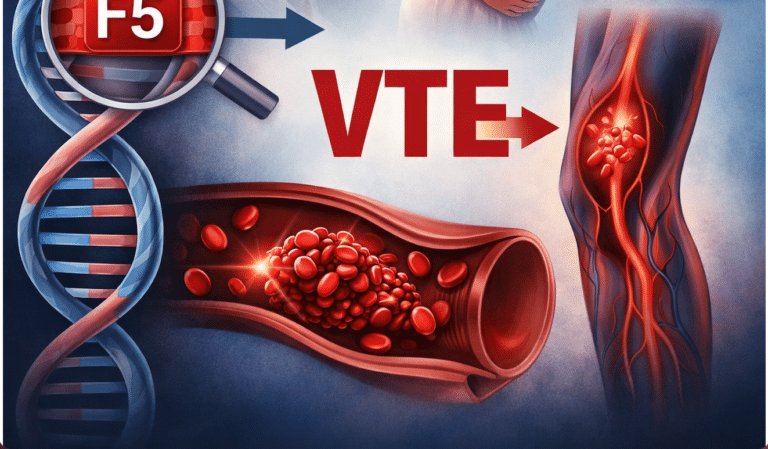
When blood pools in the lower limbs, several things happen in sequence. First, hydrostatic pressure increases in the leg veins, forcing fluid out of the capillaries and into the surrounding tissue — that’s the swelling. Second, the blood that’s sitting still becomes more viscous, especially in the dehydrating environment of a pressurised cabin, where humidity can drop to near zero. Third, and most significantly for vulnerable passengers, the combination of stasis, dehydration, and reduced cabin pressure creates the conditions in which blood can begin to clot inside the deep veins.
This is deep vein thrombosis — DVT — and it affects up to 5% of long-haul passengers depending on their age, weight, health history, medications, and the length of the flight, according to research published on the global health risk registry. The risk is not confined to economy class. It is not confined to the elderly. It is not confined to the unfit.
In fact, one of the most counterintuitive findings in sports medicine is that endurance athletes — the people who look most obviously healthy at the airport — may be among the most at-risk. Their resting heart rate is low, their blood flow is slow, and the haemoconcentration that happens at altitude compounds exactly the physiological profile that predisposes a person to clotting.
Research in New Zealand found that approximately 85% of air-travel thrombosis victims were athletic — predominantly endurance athletes, including runners and cyclists. Three Olympic athletes from the British team required treatment for DVT following the Sydney 2000 Olympics. They had competed. They had flown home. And their legs had been quietly working against them the entire way.
The Difference Between Swelling and Danger
Most passengers who land with puffy ankles are experiencing benign oedema — uncomfortable, sometimes alarming, but not dangerous. Fluid has leaked from the capillaries into the tissue, and it will resolve within hours or days as movement restores venous drainage.
The dangerous version is the one you can’t feel coming. DVT often presents with pain and warmth in one calf, but it can also be entirely asymptomatic until a clot breaks free. When a clot travels from the deep veins of the leg to the pulmonary vessels of the lungs, the result is a pulmonary embolism — a sudden blockage of blood flow that can cause collapse, cardiac arrest, and death within minutes.
The CDC notes that flights of eight to ten hours or longer carry the greatest risk, and that elevated risk persists for up to four weeks after a long-haul journey. The risk does not end when you walk off the plane.
Sarah — a composite drawn from clinical accounts in DVT survivor literature — was fit, healthy, in her mid-thirties, and had no family history of clotting disorders. She took a ten-hour flight. She slept most of it. She didn’t drink enough water. She was on the pill. Three days after landing, what felt like a leg cramp turned out to be a DVT that had already sent a fragment to her lungs. She spent a week in the hospital. She spent the following year managing post-thrombotic syndrome and the anxiety that lives on the other side of a near-miss.
“How could this happen to me?” she asked. It happens to exactly the kind of person who is least prepared for it.
The Gap Between What Travellers Are Told and What Actually Works
Most in-flight health advice is the same list it has always been: drink water, walk the aisle, do some ankle circles. This is not wrong. It is, on its own, radically insufficient for anyone flying for more than eight hours.
Here is where the gap sits:
Compression socks are not the same as compression therapy. Graduated compression stockings provide meaningful protection for low- to moderate-risk passengers on standard flights. Their effect is passive — they squeeze the leg slightly and help prevent the worst fluid pooling. But they have no moving parts. They do not pump. They apply static graduated pressure that helps most when you are already walking and helps least when you are most sedentary: asleep, feet up, not moving, exactly as most people spend long overnight flights.
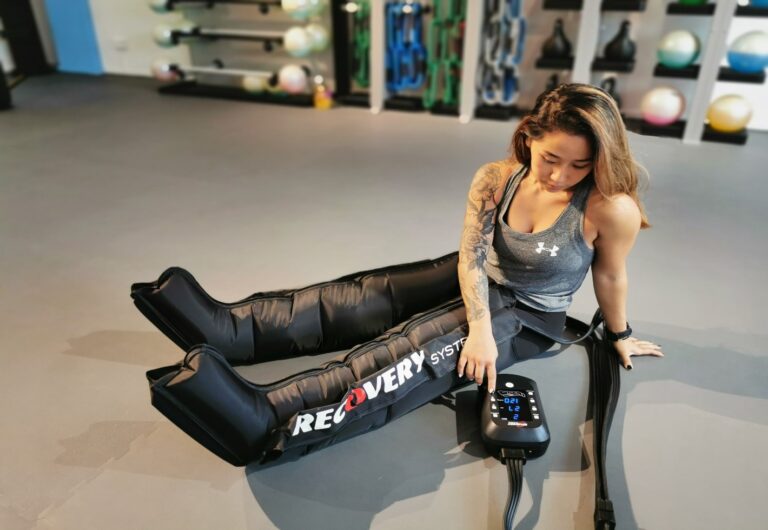
Intermittent pneumatic compression — the technology inside the Atom calf pump and the Black Max Pro range — works completely differently. It inflates and deflates in sequential cycles, actively mimicking the calf muscle pump. It pushes blood and lymphatic fluid up the leg, clears metabolic waste, and maintains venous return even while you sleep. Clinical trials comparing IPC with static compression and no intervention consistently show significantly greater reductions in lower-limb fluid accumulation and DVT-related markers. A study under simulated flight conditions found that IPC reduced lower-limb fluid accumulation by 60% compared with control participants.
The difference matters most on the flights where static compression matters least — the very long ones, overnight, when you’re not moving.
Three Types of Travellers Who Underestimate the Risk
The business commuter. Singapore to London, back four days later, maybe twice a month. Excellent seat, good airline, probably sleeps most of the flight. Drinks wine with dinner. The dehydration from altitude, the wine, and the prolonged immobility in a reclined position compound across a month of back-to-back trips into a cumulative circulatory burden that would alarm a vascular specialist.
The athlete is competing internationally. Has trained for months. Boards a fourteen-hour flight to a race or tournament. Lands with legs that feel wrong. Assumes it’s due to altitude changes or time zones. Competes below their potential on day one because the fluid accumulation and neural fatigue from the flight haven’t cleared. Worse, the same haemoconcentration that causes the heavy legs is the same physiological condition that predisposes them to clotting — and athletes, with their slower resting heart rates and already-trained bodies, accumulate this risk faster than they realise.
The parent is doing the Australia-UK run. Flies’ economy. Three small children. Gets no sleep. No aisle walks because the children are finally asleep, and she can’t bear to disturb them. Her feet don’t touch the floor properly, her calves haven’t contracted meaningfully in eight hours, and she lands in a state of exhaustion that will take three days to clear — not because of jet lag alone, but because her lower limbs are carrying the fluid burden of everything the flight took from them.
None of these people is in obvious danger. All of them are worse off than they need to be.
What the Singapore Frequent Flyer Corridor Looks Like Specifically
For travellers based in Singapore, the challenge is structural. Singapore’s position at the heart of the Asia-Pacific corridor means that almost no significant international journey takes more than 7 hours. Sydney, London, Dubai, Tokyo, New York — all of them are nine hours minimum, most of them more. The Singapore-London route operated by Singapore Airlines, one of the world’s most popular long-haul corridors, clocks in at over thirteen hours.
For regular users of this corridor — the executives running Asia-Pacific operations, the athletes competing between hemispheres, the expat families doing the school holidays run — the question of in-flight circulatory management is not academic. It is a practical question that comes up twenty, thirty, or forty times a year.
The answer that works for a single two-hour domestic flight does not scale to this travel pattern. Compression stockings and occasional ankle pumps are the minimum viable intervention. Active compression technology — portable, battery-powered, carry-on-compatible — is what the travel pattern demands.
What Compression Socks vs Compression Boots Actually Deliver
The comparison matters because marketing often blurs it.
Compression socks apply static graduated pressure, typically 15–30 mmHg, decreasing from the ankle to the calf. They help prevent some fluid accumulation when you are upright and moving. They do less when you are reclined and sedentary. They do nothing to actively move existing fluid out of the limb.
The Atom portable calf pump applies intermittent dynamic pressure up to 180 mmHg in programmable cycles, actively inflating and deflating the calf from the ankle to below the knee. It is the same principle as the sequential compression devices used in hospital settings post-surgery — the same technology prescribed after knee replacements, hip replacements, and vascular procedures precisely because the research on venous return is unambiguous. It fits under an aircraft seat. It runs on a USB battery. You can walk to the bathroom with it on.
The difference in mechanism is the difference between wearing a tight sleeve and receiving an active massage. One passively resists; the other actively pumps.
The Practical Protocol for Long-Haul Travel
This is what I use and recommend, built on both clinical evidence and two decades of personal long-haul travel as an endurance athlete and coach.
Before the flight: Hydrate aggressively for 24 hours prior. Avoid alcohol on the day before travel. If you’re a runner or cyclist, do not train hard the day before a long flight — arriving with fatigued legs and residual muscle damage is the worst starting condition.
At the gate: Put on compression gear before you board. The compression effect is most valuable when you are about to be immobile for a long time — not after you’ve been sitting for four hours. If using the Atom, activate it before take-off.
In the air: Drink water, not juice, not wine. Set a phone alarm every 90 minutes to walk three rows and back. Do seated ankle pumps during every film or podcast. If using active compression, run it continuously or in hourly cycles. Keep your legs slightly elevated if possible — even a small carry-on bag under your ankles can make a measurable difference.
After landing, keep compression on for at least 30 minutes. Walk through the terminal rather than taking the escalator or buggy. The re-mobilisation period matters. Your body needs active movement to complete the clearance process that passive flight prevented.
Watch for: Asymmetric leg swelling, warmth, or pain in one calf in the 24–72 hours after a long flight. These are DVT warning signs. If in any doubt, see a doctor. This is not the moment to wait and see.
The Bottom Line
Long-haul flying is one of the most common things millions of people do every week. For most of them, it is also one of the most underestimated physiological stressors in their lives — not because any individual flight is catastrophic, but because the accumulation of flights over months and years imposes a real circulatory burden that good equipment and good habits can substantially reduce.
Compression socks are better than nothing. Active calf compression is significantly better than compression socks. Hydration, movement, and elevation are all additive. The combination of all of them, consistently applied, is the difference between arriving in London or Sydney ready to perform and arriving and spending the first day recovering from the journey rather than from the time zone.
Your legs have work to do when you land. It’s worth keeping them in a condition to do it.
Ready to fly smarter? The Atom portable calf compression pump is compact enough to fit in a carry-on, powerful enough to make a measurable difference, and battery-powered for carry-on compatibility. From take-off to touchdown — and every long-haul after that.
This article is a follow-up to Strategies to Prevent Leg Swelling on Long-Haul Flights, which covers the clinical evidence base in detail. Read that piece for the full scientific breakdown, including references.
References
- Moller G. How to prevent deep vein thrombosis (DVT) in athletes and travelling sports teams. GaryMoller.com. 2016. [Sourced clinical case material]
- Scurr JH, Machin SJ, Bailey-King S, Mackie IJ, McDonald S, Smith PD. Frequency and prevention of symptomless deep-vein thrombosis in long-haul flights: a randomised trial. Lancet. 2001;357(9267):1485–1489.
- CDC. Understanding your risk for blood clots with travel. Centers for Disease Control and Prevention. 2024. cdc.gov/blood-clots/risk-factors/travel.html
- Philbrick JT, Shumate R, Siadaty MS, Becker DM. Air travel and venous thromboembolism: a systematic review. J Gen Intern Med. 2007;22(1):107–114.
- Healy B, Levin E, Perrin K, Weatherall M, Beasley R. Prolonged work and subsequent risk of venous thrombosis: case-control study. BMJ. 2010;340:c2972.
- Smith MK, et al. Intermittent pneumatic compression devices efficacy in flight simulation. Thromb Res. 2012.
- Caprini Risk Score Registry. Hidden dangers of blood clots during flights: a traveller’s guide. 2025. capriniriskscore.org
- Hematology.org. Blood clots and travel. American Society of Hematology. hematology.org/education/patients/blood-clots/travel
- DrDarrylLim.com. How long after a flight can DVT occur? 2025.
- Recovery Systems Sport. Atom calf and arm pump product specifications. 2025. recoverysystemssport.com
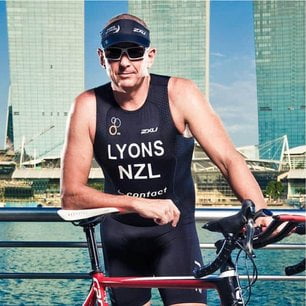
Written by: Michael Lyons
Michael Lyons is a recovery specialist with three decades of tech and Meditech experience and 15,000+ hours in endurance sports coaching. The author is not a licensed physician or medical professional. The health information in this article represents the author’s research and personal perspective, not professional medical advice.
Medically Reviewed by: Ayman Shafique, PharmD
Ayman Shafique is a licensed pharmacist with expertise in pharmacology and medical writing. Her work focuses on reviewing and developing evidence-based health and wellness content, ensuring scientific accuracy, clarity, and alignment with current pharmaceutical research. She specialises in translating complex pharmacological and medical information into accessible, reliable content for public and professional audiences.
MEDICAL DISCLAIMER
This article is for informational and educational purposes only and should not be considered medical advice. The author is a recovery specialist, not a licensed medical doctor or healthcare provider. Health-related claims discussed in this article are based on emerging research and should not replace professional medical consultation. Many claims remain theoretical and require further scientific validation. Individual results may vary, and these concepts are not widely accepted as standard medical practice. Before using any PEMF therapy device or making health decisions based on this article, please consult a qualified healthcare professional — especially if you have pre-existing medical conditions, are pregnant, have implanted medical devices such as pacemakers, or are taking medications.
Commercial Disclosure
This website sells PEMF therapy products, including BioMat technology. The author and company have a commercial interest in promoting these products.
If you are experiencing a mental health crisis or suicidal thoughts, contact your local emergency number immediately. In the United States, call or text 988. Internationally, see the International Association for Suicide Prevention directory.
Originally Published::
Author:
Michael Lyons is a biohacking and recovery specialist with three decades of tech and Meditech experience and 15,000+ hours in endurance sports coaching.