Bone Health in Menopause: What Actually Works (And Where the Biomat Fits In)
Last Updated::
If you’re in your 40s or 50s and starting to think about your bones, you’re not being paranoid — you’re paying attention to something real. The menopause transition is the single biggest turning point for bone health in a woman’s life, and the earlier you understand what’s actually happening, the more you can do about it.
This article covers the full picture: why bone loss accelerates during menopause, what the research says genuinely works to protect your skeleton, and — because this is a Recovery Systems article — an honest look at where a tool like the PEMF Biomat can realistically help. We’re not going to tell you a heat mat builds bone density. It doesn’t, and we don’t want to be the kind of company that pretends otherwise. What we will tell you is where it fits into a real, evidence-based routine.
Why Menopause Is a Turning Point for Bone Health
Oestrogen does more than regulate your cycle — it also plays a protective role in bone remodelling, the constant cycle of breakdown and rebuilding that keeps your skeleton strong. As oestrogen levels fall through perimenopause and into postmenopause, that protection fades, and the balance tips toward bone loss.
The numbers vary between studies, but the general pattern is consistent: bone loss speeds up in the years immediately around the final menstrual period, then settles into a slower, ongoing decline afterwards. The Endocrine Society and the North American Menopause Society (NAMS) both note that a meaningful share of a woman’s lifetime bone loss — commonly cited as up to approximately 20 per cent — occurs during this transition window, with the fastest loss typically in late perimenopause and the first few years postmenopause. Please treat that figure as approximate and verify it against a primary source such as the Endocrine Society or NAMS if you’re citing it elsewhere, since studies differ in how they define the measurement period. Cleveland Clinic Journal of Medicine and the North American Menopause Society
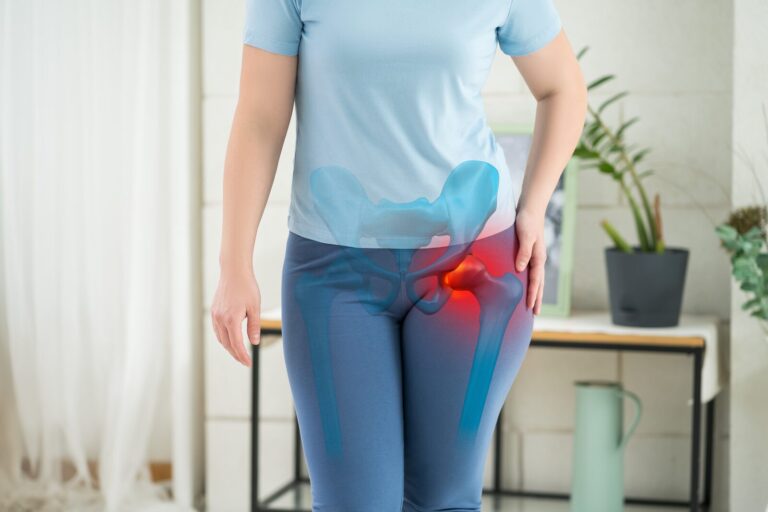
This isn’t a cosmetic issue. Lower bone density raises the risk of fracture later in life, and hip and spine fractures in older women are strongly linked to loss of independence. That’s the real reason this matters, and it’s why the conversation deserves more than a supplement ad and a shrug.
The Part That Actually Moves the Needle: What the Research Supports
We’d rather give you the short, honest list than a long one padded with things that sound good but don’t have real evidence behind them.
Resistance and weight-bearing exercise have the strongest evidence base of any intervention outside of medication. Multiple systematic reviews of randomised controlled trials in postmenopausal women show that structured resistance training — done with real, progressive loading, not just light activity — produces measurable improvements in bone mineral density at the spine and hip, the two sites most closely tied to fracture risk. We’ve covered this in more depth in a related article on strength training and the menopause transition, and it remains the single most important thing on this list.
Calcium and vitamin D intake matter because bone remodelling requires the raw material to rebuild with. Most health authorities recommend postmenopausal women get approximately 1,200 mg of calcium and 800 to 1,000 IU of vitamin D daily, through diet, sensible sun exposure, or supplementation — but you should verify current recommended intakes with your doctor, since guidelines are periodically updated and individual needs vary.
Adequate protein intake supports both muscle and bone health, and inadequate protein is increasingly recognised as an under-addressed risk factor in older women.
Fall-risk reduction — vision checks, balance work, safe footwear, home hazards — doesn’t build bone, but a fracture usually starts with a fall, so this belongs on the list of things that genuinely protect you.
A DEXA scan, where accessible, gives you and your doctor an actual baseline instead of a guess, and lets you track whether your interventions are working.
Avoiding smoking and excessive alcohol is consistently associated with better bone outcomes in the research, for reasons related to both direct bone metabolism and fall risk.
If a product or protocol claims to reverse osteoporosis without addressing these fundamentals, that claim should make you cautious. We’d say the same thing about our own products, which brings us to the next section.
Where Recovery Technology Honestly Fits In
Here’s the part most wellness companies don’t say clearly enough: no compression device, heat mat, or PEMF device has the large-scale, replicated trial evidence for bone density that resistance training has. We’re not going to imply otherwise.
What recovery tools can genuinely help with is consistency — and consistency is the quiet variable that determines whether the interventions above actually happen for months and years, rather than for three enthusiastic weeks in January.
A few things worth knowing, stated as plainly as the evidence allows:
Sleep and bone health appear to be connected, though the research is still developing. Several observational studies have found associations between poor sleep quality and lower bone mineral density in peri- and postmenopausal women, and researchers have proposed that disrupted sleep affects cortisol and oestrogen regulation in ways that could plausibly influence bone metabolism. That said, this is associational research, not proof of cause and effect, and at least one study found no significant link between sleep quality and bone density measurements in postmenopausal women with osteoporosis. We’d recommend treating “poor sleep is bad for your bones” as a reasonable, evidence-informed concern rather than a settled fact. National Institutes of Health (PMC), PubMed, and National Institutes of Health (PMC)
Joint and muscle comfort affects whether you keep training. Menopause frequently brings joint aches, stiffness, and disrupted sleep alongside the hormonal changes driving bone loss. None of that is imagined, and all of it can make a scheduled resistance session feel optional. Far-infrared heat and PEMF therapy have a longer, more established research history for supporting circulation, easing muscular stiffness, and promoting relaxation than they do for bone density specifically — and that’s a legitimate, if more modest, role to play. If heat and gentle recovery help you actually show up for your next weights session instead of skipping it, that’s a real contribution to your bone health outcome, even though the mat itself isn’t the mechanism building the bone.
The direct bone-density research on PEMF and far-infrared therapy is real but early. There is a genuine and growing body of preclinical research — cell studies and animal models — showing that PEMF and far-infrared exposure can stimulate osteogenic (bone-forming) cell activity, and a small number of human trials and meta-analyses have explored PEMF specifically for osteoporosis management with encouraging but not yet conclusive results. This is worth knowing about and worth watching. Still, it is not the same as a large, replicated human clinical trial showing that using a PEMF mat increases bone density in menopausal women. We’d rather tell you that honestly than let a hopeful reader assume more than the evidence currently supports. You may want to verify the current state of this research before drawing firm conclusions, as it continues to evolve. Wiley Journal of Tissue Engineering and Regenerative Medicine, and ScienceDirect
Stress reduction has a plausible, if indirect, role. Chronic stress and elevated cortisol are recognised in the endocrinology literature as unfavourable for bone metabolism over time. A relaxation practice — whether that’s the Biomat, meditation, or something else entirely — that meaningfully lowers your day-to-day stress load is reasonable to view as supportive of overall hormonal and bone health, even though it’s one contributing factor among many rather than a primary intervention.
How the Biomat Fits Into a Real Routine
Given all of that, here’s the honest pitch, not the hyped one.
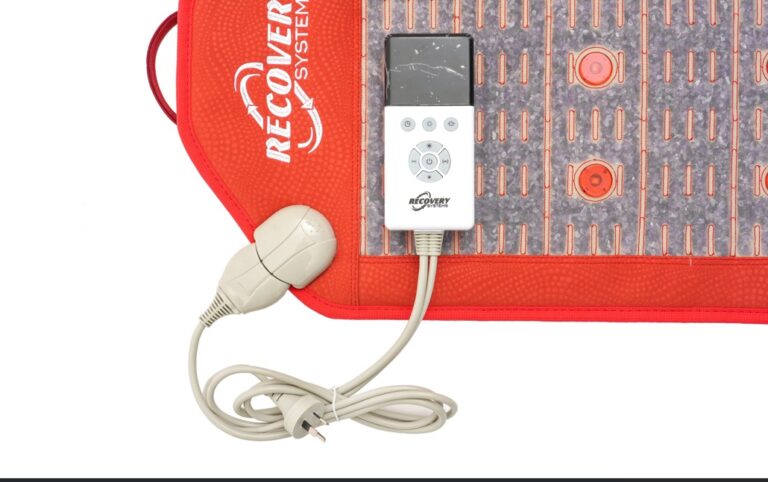
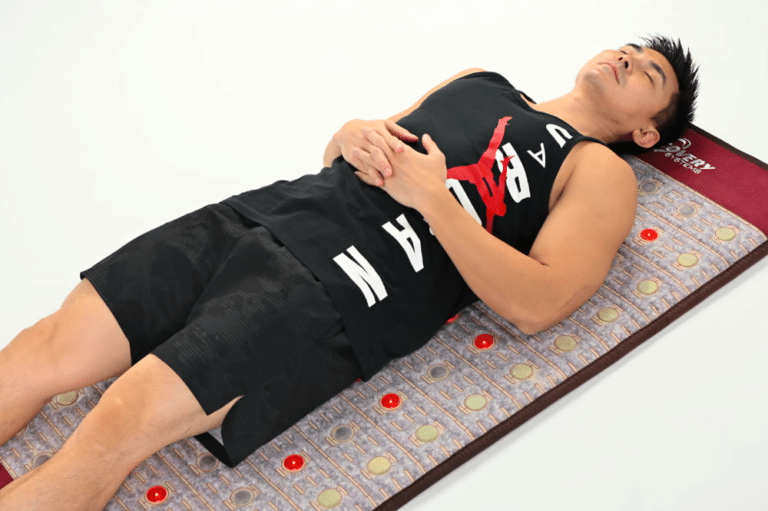
The Recovery Systems PEMF Biomat combines PEMF therapy, far-infrared heat, red light therapy, negative ion output, and gentle warmth in a single mat, used for 20 to 60 minutes at a time. Its best-supported, most consistently reported benefits — including from our own customers — are improved sleep quality, reduced muscular and joint stiffness, and a genuine sense of relaxation and stress relief.
If you’re building a bone-health routine around resistance training, calcium and protein intake, and fall-risk reduction — the parts with the strongest evidence — the Biomat’s role is to help you actually sustain that routine: easing the joint stiffness that makes you want to skip leg day, supporting the sleep that your hormones and your motivation both depend on, and giving you a wind-down practice that helps manage the stress of a genuinely demanding life stage. That’s a smaller claim than “this mat protects your bones.” It’s also a true one, and we’d rather earn your trust with the true version.
A Practical Starting Point
- Talk to your doctor about a DEXA scan if you haven’t had one, especially if you’re postmenopausal or have other risk factors.
- Prioritise structured resistance training, ideally with guidance from a trainer or physiotherapist familiar with bone density work.
- Check your calcium, vitamin D, and protein intake against current guidelines, and address any gaps with food first, supplements where needed.
- Reduce fall risk through balance work, vision checks, and a safer home environment.
- Use recovery tools — including the Biomat — to protect your sleep and manage the aches that threaten your consistency, understood clearly as support for the plan above, not a replacement for it.
The Bottom Line
Bone health after menopause is genuinely manageable, but the intervention that matters most is resistance training, backed by good nutrition, fall prevention, and regular screening. Recovery technology’s honest job is to help you actually stick with that plan when joint stiffness, poor sleep, and everyday stress make it tempting to stop. That’s the role the Biomat plays in our own routine and in the routines of the customers who’ve told us it’s made the difference between training consistently and training in bursts — and it’s the role we’d recommend it for, without overstating what it does.
Sources
Statistics on bone loss during the menopause transition are drawn from the Endocrine Society’s patient resource “Menopause and Bone Loss,” NAMS position statements on osteoporosis management, and the Cleveland Clinic Journal of Medicine review “To Scan or Not to Scan? DXA in Postmenopausal Women.” Findings on resistance training and bone mineral density in postmenopausal women are discussed further in our related article on strength training and the menopause transition. Research on sleep quality and bone mineral density is drawn from studies indexed on PubMed and PMC, including “Association Between Sleep Quality and Bone Mineral Density in Chinese Women” and “The Relationship Between Bone Mineral Density, Vitamin D Level, and Sleep Quality in Postmenopausal Women with Osteoporosis.” Preclinical research on PEMF and far-infrared therapy and bone cell activity is drawn from studies published via Wiley’s Journal of Tissue Engineering and Regenerative Medicine and ScienceDirect. As with our other articles, please verify these sources and current statistics against the primary literature before publishing, as research in this area continues to evolve.
About the Author
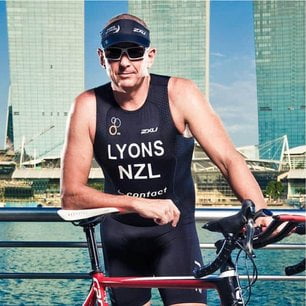
Michael Lyons
With three decades of tech and Meditech experience and 15,000 hours of endurance sports coaching and competing at the NZ national team level, Michael’s passion is biohacking recovery and wellness for athletes, for those with short- and long-term medical conditions, and healthy ageing.
Michael consults and partners with leading medical practitioners to provide therapy solutions for short- and long-term illnesses, including diabetes, DVT, lymphedema, pre- and postnatal, post-surgery, autism (ASD), PTSD, and sleep apnea.
Originally Published::
Author:
Michael Lyons is a biohacking and recovery specialist with three decades of tech and Meditech experience and 15,000+ hours in endurance sports coaching.